-
|
-
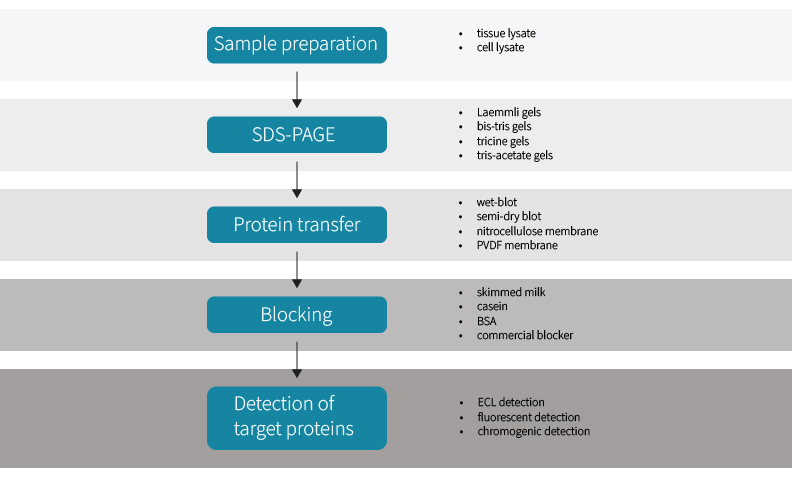
In standard Western blot (WB) analysis, proteins are first separated according to their molecular weight using denaturing SDS-PAGE (sodium dodecyl sulfate–polyacrylamide gel electrophoresis). The separated proteins are then transferred onto a membrane, where they are detected using specific antibodies.
SDS (sodium dodecyl sulfate) is an anionic detergent that denatures proteins and uniformly coats them with a negative charge. This treatment ensures that protein migration during electrophoresis depends primarily on size rather than intrinsic charge or shape. The addition of reducing agents such as β-mercaptoethanol or DTT (dithiothreitol) breaks disulfide bonds, and heating the samples promotes complete protein unfolding.
Proteins of interest are typically detected using a primary antibody that specifically binds the target protein. A secondary antibody, directed against the primary antibody, is then applied. This secondary antibody is conjugated to an enzyme or fluorophore, enabling visualization of the signal.
Certificates
ISO 9001 2015 Quality Management System and Green Lab Platinum certification level for sustaining laboratory processes.


Newsletter
Sign up for our newsletter and get the latest updates and news.