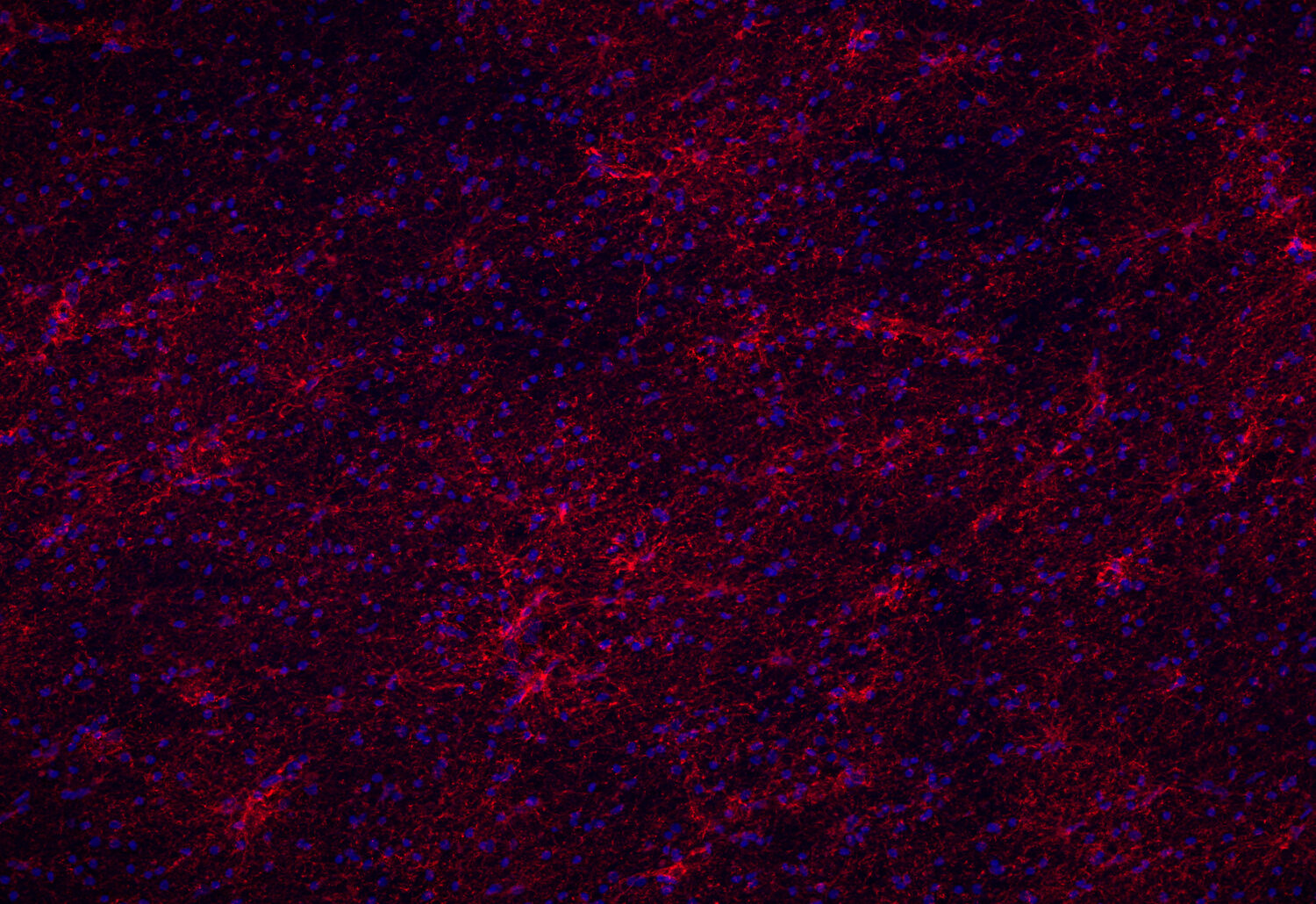
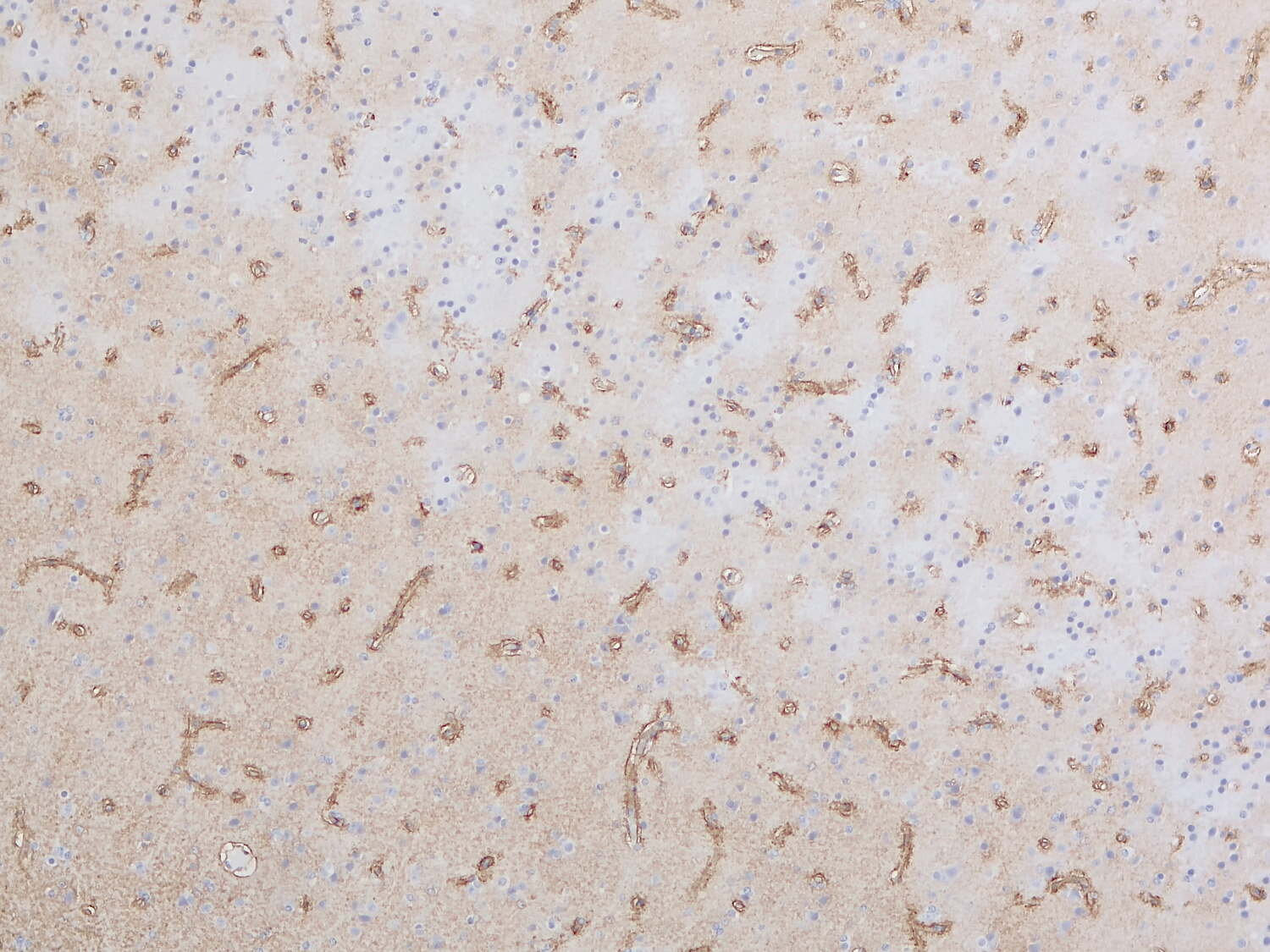
Cat. No.: 429 008
Amount: 50 µg
Price:
$420.00


|

|
|
| Cat. No. 429 008 |
50 µg purified recombinant IgG, lyophilized. Albumin and azide were added for stabilization. For reconstitution add 50 µl H2O to get a 1mg/ml solution in PBS. Then aliquot and store at -20°C to -80°C until use. Antibodies should be stored at +4°C when still lyophilized. Do not freeze! |
| Applications | |
| Clone | Rb325B5A5 |
| Subtype | IgG1 (κ light chain) |
| Immunogen | Recombinant protein corresponding to residues near the carboxy terminus of mouse Aquaporin-4 isoform 2 (UniProt Id: P55088-1) |
| Reactivity |
Reacts with: mouse (P55088-1), rat (P47863), human (P55087), monkey. Other species not tested yet. |
| Matching control protein/peptide | 429-0P |
| Remarks |
This antibody is a chimeric antibody based on the well known monoclonal mouse antibody clone 325B5A5. The constant regions of the heavy and light chains have been replaced with rabbit specific sequences. Therefore, the antibody can be used with standard anti-rabbit secondary reagents. The antibody has been expressed in mammalian cells |
| Data sheet | Data Sheet 429_008 |
|
|

Aquaporin 4 (AQP4) is the most abundant bidirectional water-channel in the central nervous system. It is particularly abundant in astrocytes, where it is highly concentrated in the perivascular end-feet surrounding blood vessels and at the interfaces between brain tissue and cerebrospinal fluid (1). AQP4 is also expressed in ependymal cells and, outside the CNS, in tissues including the kidney, skeletal muscle, lung, stomach and several glandular epithelia (2,3).
It contributes to the regulation of water and ion homeostasis, extracellular volume, brain edema and blood–brain barrier function. AQP4 is also an important component of the glymphatic system, which facilitates the movement and clearance of substances through the brain interstitial space (1,4).
Alterations in AQP4 expression or localization have been implicated in a number of pathological conditions including neuroinflammation, brain edema, traumatic brain injury, neurodegenerative disorders and neuromyelitis optica spectrum disorders (NMOSD)(4).
For more information on protein expression pattern, please refer to the overview image in our SYSY Antibodies ATLAS.
Certificates
ISO 9001 2015 Quality Management System and Green Lab Platinum certification level for sustaining laboratory processes.


Newsletter
Sign up for our newsletter and get the latest updates and news.