Tailor-made Antibodies
and Tools for Life Science
Home | | | | | Technical Support

Tau antibody - 314 002

Tau is a neuronal microtubule associated protein
Rabbit polyclonal antiserum
Cat. No.: 314 002
Amount: 200 µl
Price: $360.00

Cat. No. 314 002 200 µl antiserum, lyophilized. For reconstitution add 200 µl H2O, then aliquot and store at -20°C until use.
Antibodies should be stored at +4°C when still lyophilized. Do not freeze!
Applications
 
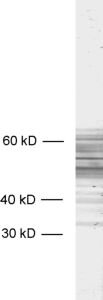
WB: 1 : 1000 (AP staining) gallery  
IP: yes
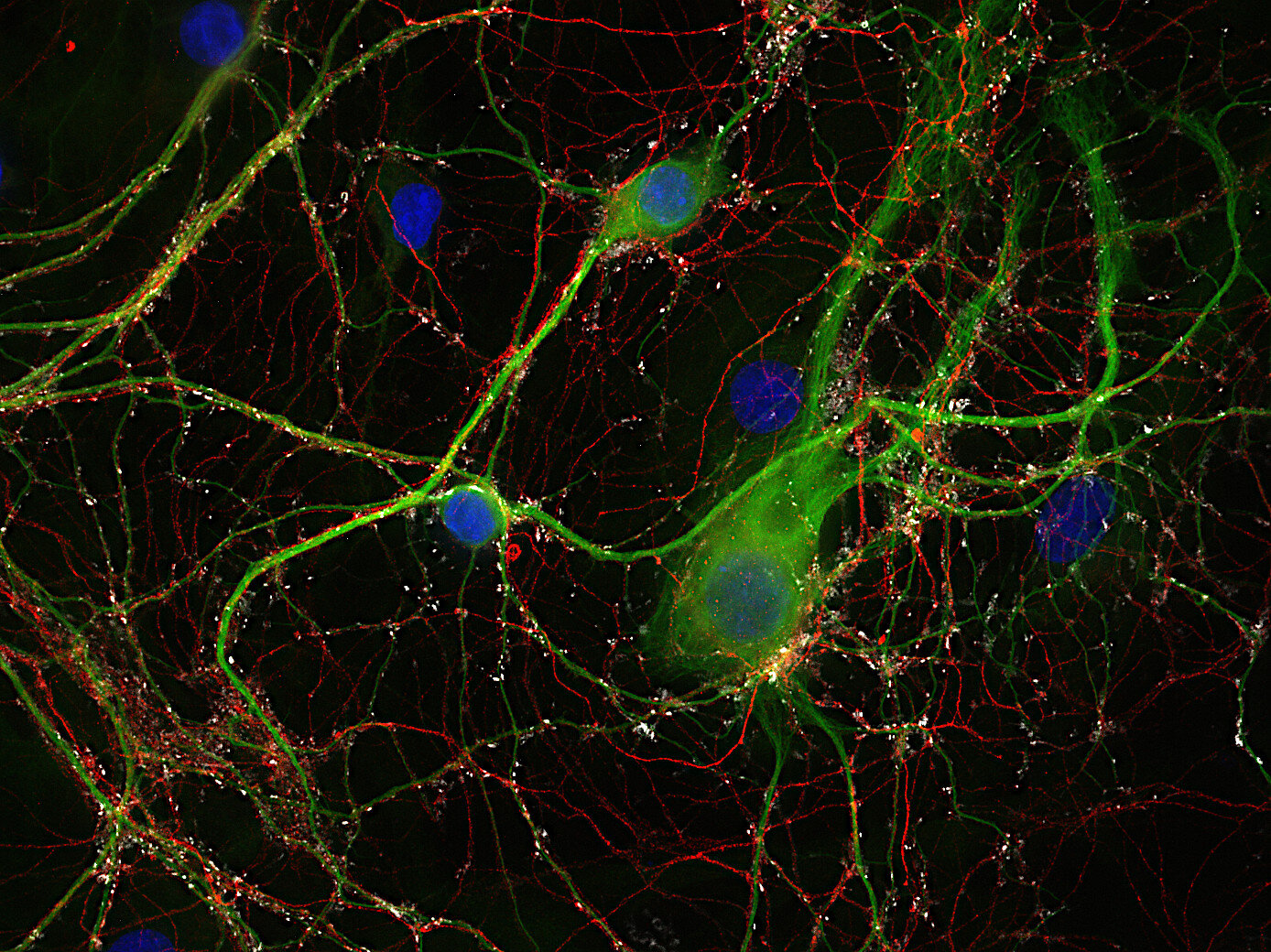
ICC: 1 : 1000 gallery  
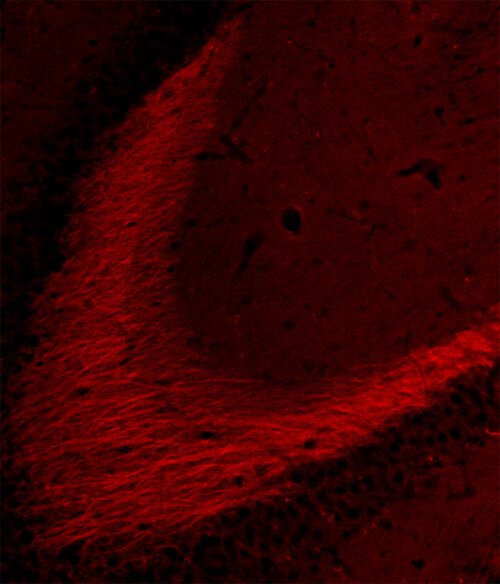
IHC: 1 : 500 gallery  
IHC-P: not tested yet

Western blot (WB); separation of proteins by PAGE and subsequent transfer to a membrane. Detection of target molecules is carried out with antibodies. Some antibodies require special sample preparation steps. For details, please refer to the “Remarks” section.

Immunoprecipitation (IP); Immunoisolation or pulldown of a target molecule using an antibody. For details and product specific hints, please refer to the ”Remarks” section.

Immunocytochemistry (ICC) on 4% PFA fixed cells. Immunoreactivity is usually revealed by fluorescence. Some antibodies require special fixation methods. For details, please refer to the “Remarks” section.

Immunohistochemistry (IHC) on 4% PFA perfusion fixed tissue with 24h PFA post fixation. Immunoreactivity is usually revealed by fluorescence or a chromogenic substrate. Some antibodies require special fixation methods or antigen retrieval steps. For details, please refer to the ”Remarks” section.

Immunohistochemistry (IHC-P) of formalin fixed, paraffin embedded (FFPE) tissue (some antibodies require special antigen retrieval steps, please refer to the ”Remarks” section). Immunoreactivity is usually revealed by fluorescence or a chromogenic substrate.

Immunogen Recombinant protein corresponding to the N-terminal half of mouse Tau-D (UniProt Id: P10637-5)
Reactivity Reacts with: rat (P19332), mouse (P10637).
Weaker signal: human (P10636).
Other species not tested yet.
Specificity This antibody binds phosphorylated and non-phosphorylated tau proteins. The sequence used for immunization is present in all splice variants except human TauA (UniProt Id: P10636-3).
Matching control protein/peptide 314-0P
Remarks

For human tissue cat.no. 314 012 and 314 111 are highly recommended.

Data sheet 314_002.pdf

References for Tau - 314 002

The frontotemporal dementia mutation R406W blocks tau's interaction with the membrane in an annexin A2-dependent manner.
Gauthier-Kemper A, Weissmann C, Golovyashkina N, Sebö-Lemke Z, Drewes G, Gerke V, Heinisch JJ, Brandt R
The Journal of cell biology (2011) 1924: 647-61. 314 002 WB, ICC
Vinculin-mediated axon growth requires interaction with actin but not talin in mouse neocortical neurons.
Mandal P, Belapurkar V, Nair D, Ramanan N
Cellular and molecular life sciences : CMLS (2021) 7815: 5807-5826. 314 002 ICC; tested species: mouse
The role of ubiquitin ligase E3A in polarized contact guidance and rescue strategies in UBE3A-deficient hippocampal neurons.
Tonazzini I, Van Woerden GM, Masciullo C, Mientjes EJ, Elgersma Y, Cecchini M
Molecular autism (2019) 10: 41. 314 002 ICC; tested species: mouse
Proteolytically released Lasso/teneurin-2 induces axonal attraction by interacting with latrophilin-1 on axonal growth cones.
Vysokov NV, Silva JP, Lelianova VG, Suckling J, Cassidy J, Blackburn JK, Yankova N, Djamgoz MB, Kozlov SV, Tonevitsky AG, Ushkaryov YA, et al.
eLife (2018) 7: . 314 002 ICC; tested species: rat
HuD Is a Neural Translation Enhancer Acting on mTORC1-Responsive Genes and Counteracted by the Y3 Small Non-coding RNA.
Tebaldi T, Zuccotti P, Peroni D, Köhn M, Gasperini L, Potrich V, Bonazza V, Dudnakova T, Rossi A, Sanguinetti G, Conti L, et al.
Molecular cell (2018) 712: 256-270.e10. 314 002 ICC; tested species: mouse
Biocompatibility of a Magnetic Tunnel Junction Sensor Array for the Detection of Neuronal Signals in Culture.
Moretti D, DiFrancesco ML, Sharma PP, Dante S, Albisetti E, Monticelli M, Bertacco R, Petti D, Baldelli P, Benfenati F
Frontiers in neuroscience (2018) 12: 909. 314 002 ICC; tested species: rat
CRMP1 and CRMP2 have synergistic but distinct roles in dendritic development.
Makihara H, Nakai S, Ohkubo W, Yamashita N, Nakamura F, Kiyonari H, Shioi G, Jitsuki-Takahashi A, Nakamura H, Tanaka F, Akase T, et al.
Genes to cells : devoted to molecular & cellular mechanisms (2016) 219: 994-1005. 314 002 ICC; tested species: mouse
The frontotemporal dementia mutation R406W blocks tau's interaction with the membrane in an annexin A2-dependent manner.
Gauthier-Kemper A, Weissmann C, Golovyashkina N, Sebö-Lemke Z, Drewes G, Gerke V, Heinisch JJ, Brandt R
The Journal of cell biology (2011) 1924: 647-61. 314 002 WB, ICC
Mammalian target of rapamycin (mTOR) activation increases axonal growth capacity of injured peripheral nerves.
Abe N, Borson SH, Gambello MJ, Wang F, Cavalli V
The Journal of biological chemistry (2010) 28536: 28034-43. 314 002 ICC
Cat. No.: 314 002
Amount: 200 µl
Price: $360.00
The frontotemporal dementia mutation R406W blocks tau's interaction with the membrane in an annexin A2-dependent manner.
Gauthier-Kemper A, Weissmann C, Golovyashkina N, Sebö-Lemke Z, Drewes G, Gerke V, Heinisch JJ, Brandt R
The Journal of cell biology (2011) 1924: 647-61. 314 002 WB, ICC
Vinculin-mediated axon growth requires interaction with actin but not talin in mouse neocortical neurons.
Mandal P, Belapurkar V, Nair D, Ramanan N
Cellular and molecular life sciences : CMLS (2021) 7815: 5807-5826. 314 002 ICC; tested species: mouse
The role of ubiquitin ligase E3A in polarized contact guidance and rescue strategies in UBE3A-deficient hippocampal neurons.
Tonazzini I, Van Woerden GM, Masciullo C, Mientjes EJ, Elgersma Y, Cecchini M
Molecular autism (2019) 10: 41. 314 002 ICC; tested species: mouse
Proteolytically released Lasso/teneurin-2 induces axonal attraction by interacting with latrophilin-1 on axonal growth cones.
Vysokov NV, Silva JP, Lelianova VG, Suckling J, Cassidy J, Blackburn JK, Yankova N, Djamgoz MB, Kozlov SV, Tonevitsky AG, Ushkaryov YA, et al.
eLife (2018) 7: . 314 002 ICC; tested species: rat
HuD Is a Neural Translation Enhancer Acting on mTORC1-Responsive Genes and Counteracted by the Y3 Small Non-coding RNA.
Tebaldi T, Zuccotti P, Peroni D, Köhn M, Gasperini L, Potrich V, Bonazza V, Dudnakova T, Rossi A, Sanguinetti G, Conti L, et al.
Molecular cell (2018) 712: 256-270.e10. 314 002 ICC; tested species: mouse
Biocompatibility of a Magnetic Tunnel Junction Sensor Array for the Detection of Neuronal Signals in Culture.
Moretti D, DiFrancesco ML, Sharma PP, Dante S, Albisetti E, Monticelli M, Bertacco R, Petti D, Baldelli P, Benfenati F
Frontiers in neuroscience (2018) 12: 909. 314 002 ICC; tested species: rat
CRMP1 and CRMP2 have synergistic but distinct roles in dendritic development.
Makihara H, Nakai S, Ohkubo W, Yamashita N, Nakamura F, Kiyonari H, Shioi G, Jitsuki-Takahashi A, Nakamura H, Tanaka F, Akase T, et al.
Genes to cells : devoted to molecular & cellular mechanisms (2016) 219: 994-1005. 314 002 ICC; tested species: mouse
The frontotemporal dementia mutation R406W blocks tau's interaction with the membrane in an annexin A2-dependent manner.
Gauthier-Kemper A, Weissmann C, Golovyashkina N, Sebö-Lemke Z, Drewes G, Gerke V, Heinisch JJ, Brandt R
The Journal of cell biology (2011) 1924: 647-61. 314 002 WB, ICC
Mammalian target of rapamycin (mTOR) activation increases axonal growth capacity of injured peripheral nerves.
Abe N, Borson SH, Gambello MJ, Wang F, Cavalli V
The Journal of biological chemistry (2010) 28536: 28034-43. 314 002 ICC
Background

There are two major classes of heat-stable microtubule-associated proteins (MAPs): MAP2 and Tau (MAPT).
Tau is expressed in several isoforms in human brain (Tau-A, 2N4R/Tau-F, 1N4R/Tau-E, 0N4R/Tau-D, 2N3R/Tau-C, 1N3R/Tau-B, 0N3R) and rodents (Tau-A, 2N4R/Tau-F, 1N4R/Tau-E, 0N4R/Tau-D) (1). Tau helps to stabilize axonal microtubules and modulate axonal transport, with isoform diversity and phosphorylation status determining their dynamics and affinity for microtubules. Tauopathies, often associated with abnormal phosphorylation (2, 3), can be classified according to the Tau isoforms present in the pathological inclusions. For instance, Pick's disease (PiD) is characterized by tangles containing 3R-Tau isoforms (0N3R, 1N3R, and 2N3R), whereas 4R-Tau (0N4R, 1N4R, and 2N4R) accumulates in disorders like progressive supranuclear palsy (PSP) and corticobasal degeneration (CBD). In Alzheimer's disease (AD) aggregates consist of all Tau isoforms (1).
Tau is abundantly expressed in the central and peripheral nervous system. Compared to the CNS, the PNS shows a predominance of 4R Tau isoforms (0N4R, 1N4R, 2N4R), which are thought to provide stronger microtubule binding and stability needed for long peripheral axons (1, 4).


Since microtubule dynamics are central to cell division, migration, and morphology, aberrations in Tau expression have been implicated in several types of cancer (5). Notably, Tau is increasingly recognized for its role in tumor progression and resistance to cancer therapy, with glioblastoma (GBM), making Tau a potential biomarker and therapeutic target (6,7).