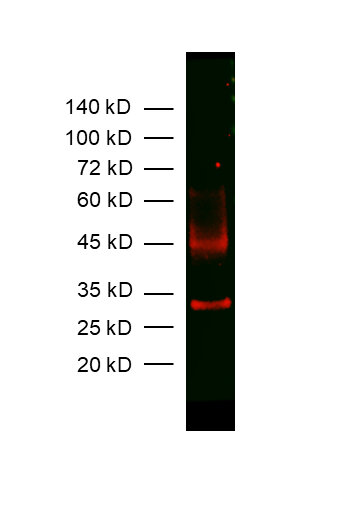
Cat. No.: 555 003
Amount: 50 µg
Price:
$380.00


|

|
|
| Cat. No. 555 003 |
50 µg specific antibody, lyophilized. Affinity purified with the immunogen. Albumin and azide were added for stabilization. For reconstitution add 50 µl H2O to get a 1mg/ml solution in PBS. Then aliquot and store at -20°C to -80°C until use. Antibodies should be stored at +4°C when still lyophilized. Do not freeze! |
| Applications | |
| Immunogen | Synthetic peptide corresponding to residues near the carboxy terminus of human CD28 (UniProt Id: P10747) |
| Reactivity |
Reacts with: human (P10747). Other species not tested yet. |
| Remarks |
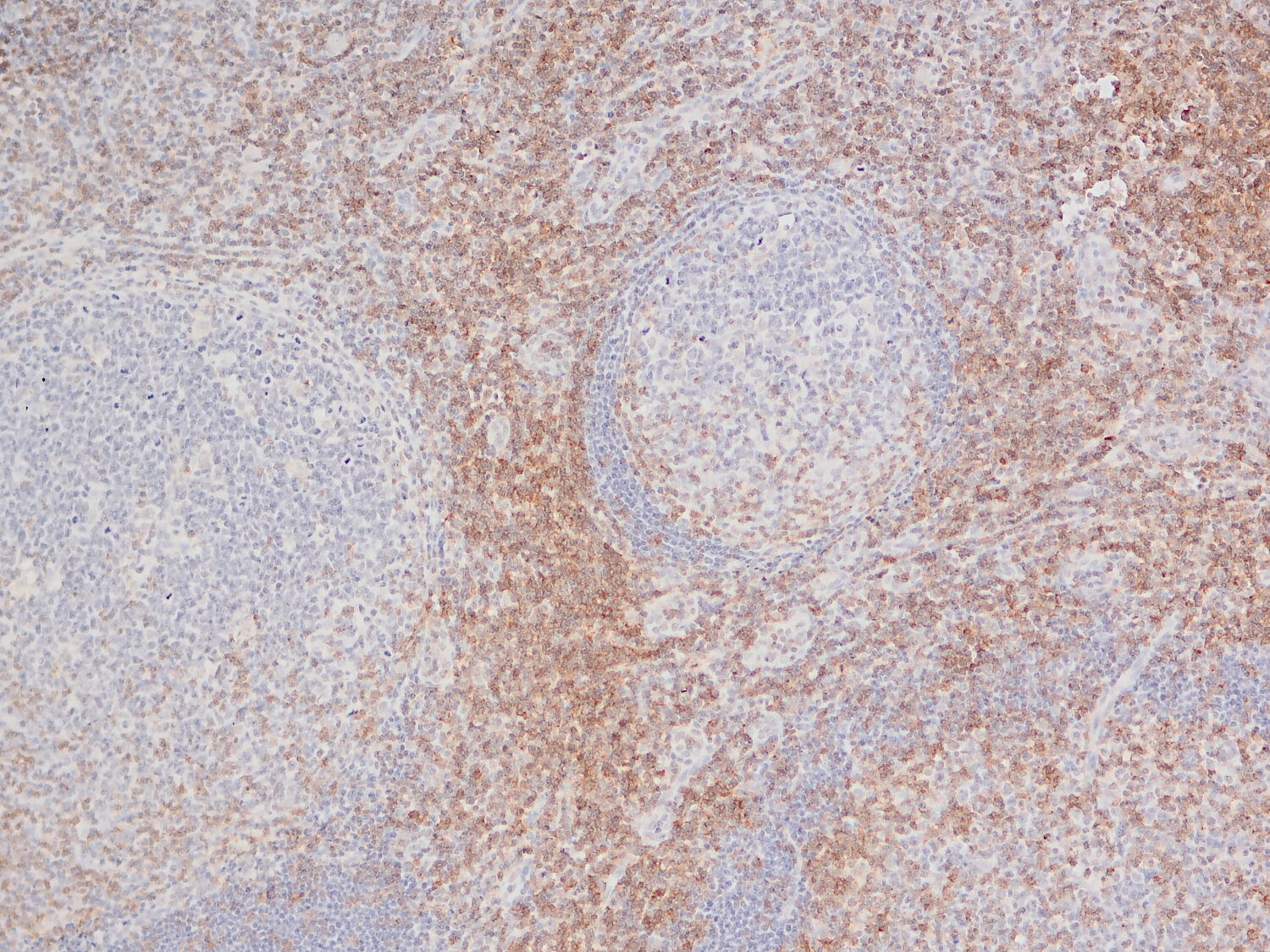
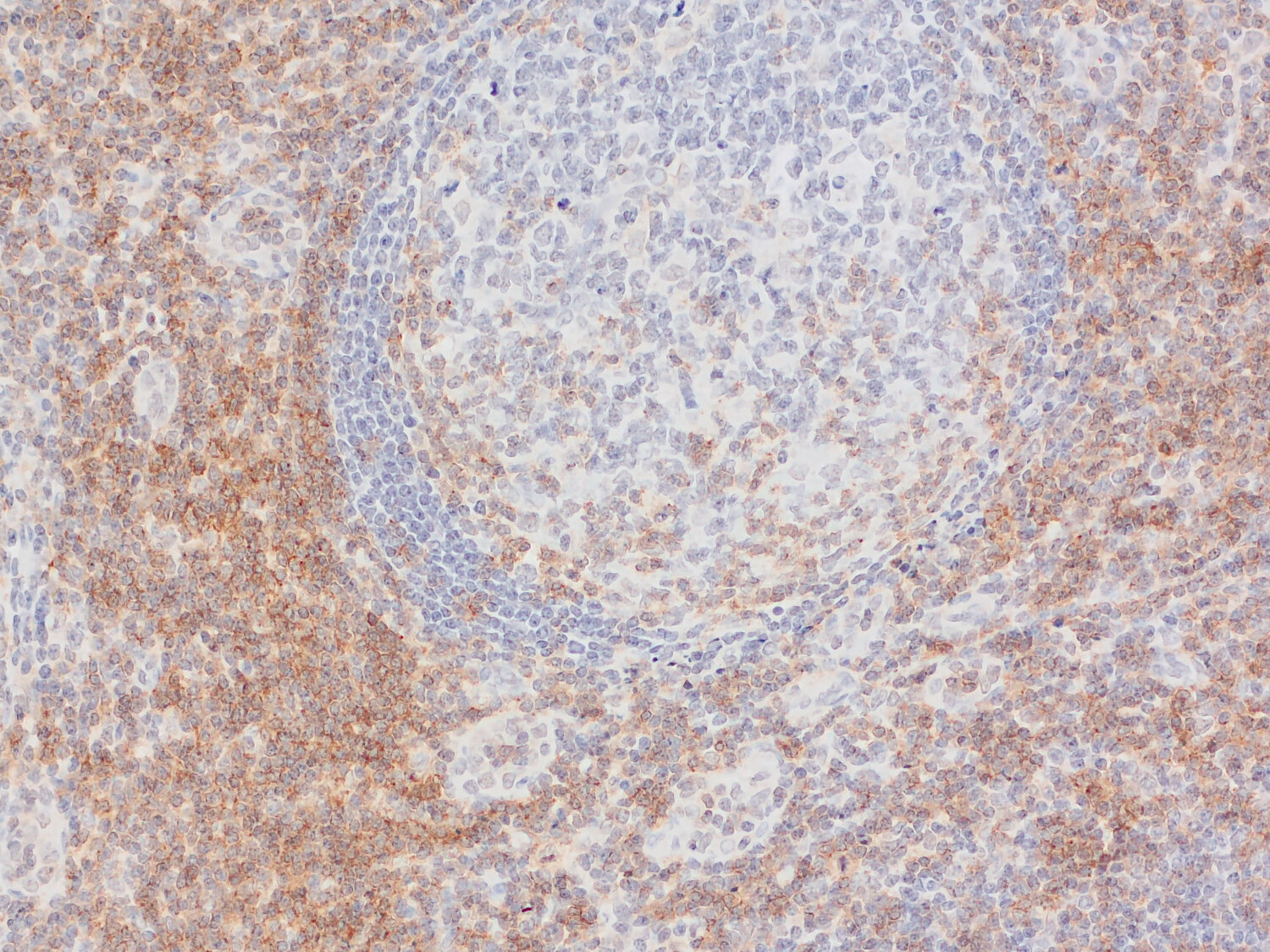
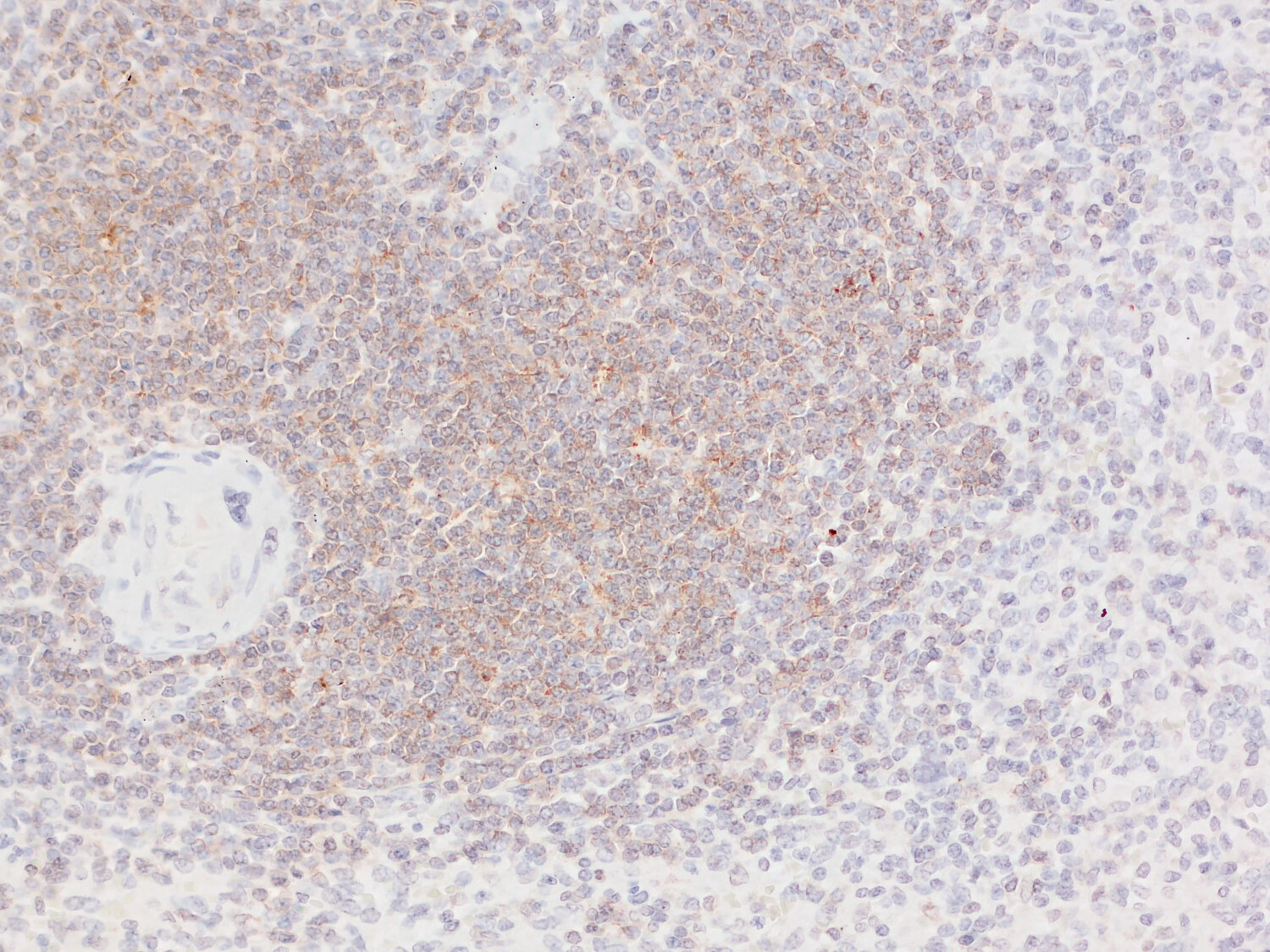
IHC-P (FFPE): Antigen retrieval with Tris-EDTA buffer pH 9 is recommended for chromogenic detection. |
| Data sheet | Data Sheet 555_003 |
|
|
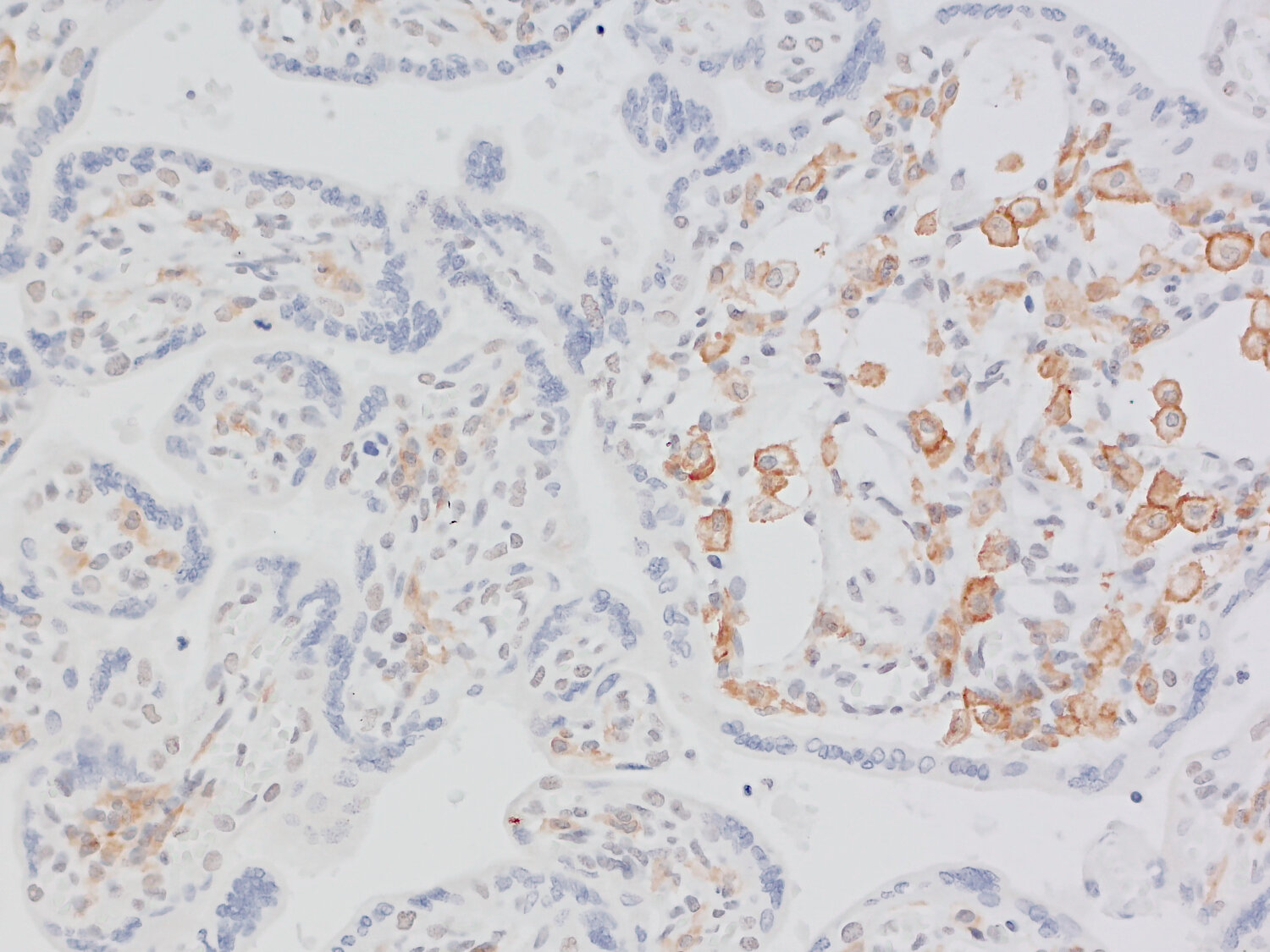
CD28 staining of a human placenta
CD28 is a central co-stimulatory receptor required for optimal T-cell activation, expansion, and survival. Constitutively expressed on most naïve T-cells, CD28 binds the B7 family ligands CD80 (B7-1) and CD86 (B7-2) on antigen-presenting cells, delivering the “second signal” necessary to complement T-cell receptor (TCR) recognition of antigen and prevent anergy (1, 2). Upon ligation, CD28 amplifies intracellular signaling pathways including phosphoinositide 3-kinase (PI3K), Akt, NF-κB, and MAPK, thereby enhancing interleukin-2 (IL-2) production, cell-cycle progression, metabolic fitness, and resistance to apoptosis (3, 4). In addition to its role in normal immune responses, dysregulated CD28 signaling contributes to autoimmunity, chronic inflammation, and transplant rejection, while its manipulation has become highly relevant in cancer immunotherapy and immune modulation (5). The importance of CD28 is also underscored in chimeric antigen receptor (CAR) T-cell design, where incorporation of the CD28 intracellular signaling domain promotes robust effector activity and functional persistence (6, 7).
Certificates
ISO 9001 2015 Quality Management System and Green Lab Platinum certification level for sustaining laboratory processes.

Newsletter
Sign up for our newsletter and get the latest updates and news.