Cat. No.: 549 003
Amount: 50 µg
Price:
$380.00


|

|
|
| Cat. No. 549 003 |
50 µg specific antibody, lyophilized. Affinity purified with the immunogen. Albumin and azide were added for stabilization. For reconstitution add 50 µl H2O to get a 1mg/ml solution in PBS. Then aliquot and store at -20°C to -80°C until use. Antibodies should be stored at +4°C when still lyophilized. Do not freeze! |
| Applications | |
| Immunogen | Synthetic peptide corresponding to residues surrounding AA50 of mouse RAGE (UniProt Id: Q62151) |
| Reactivity |
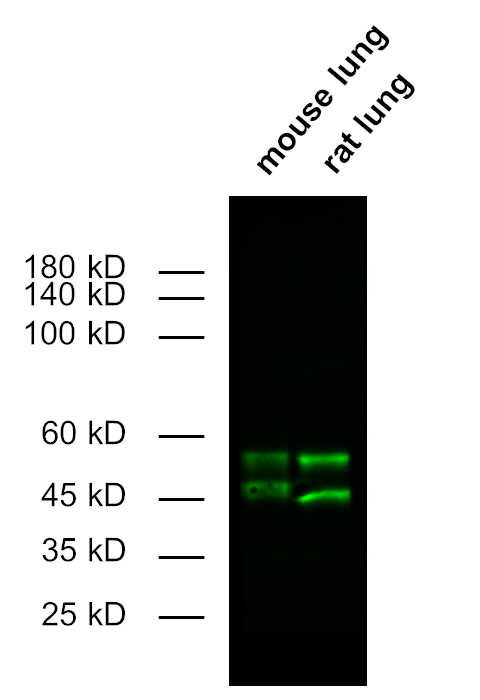
Reacts with: mouse (Q62151), rat (Q63495), human (Q15109). Other species not tested yet. |
| Remarks |
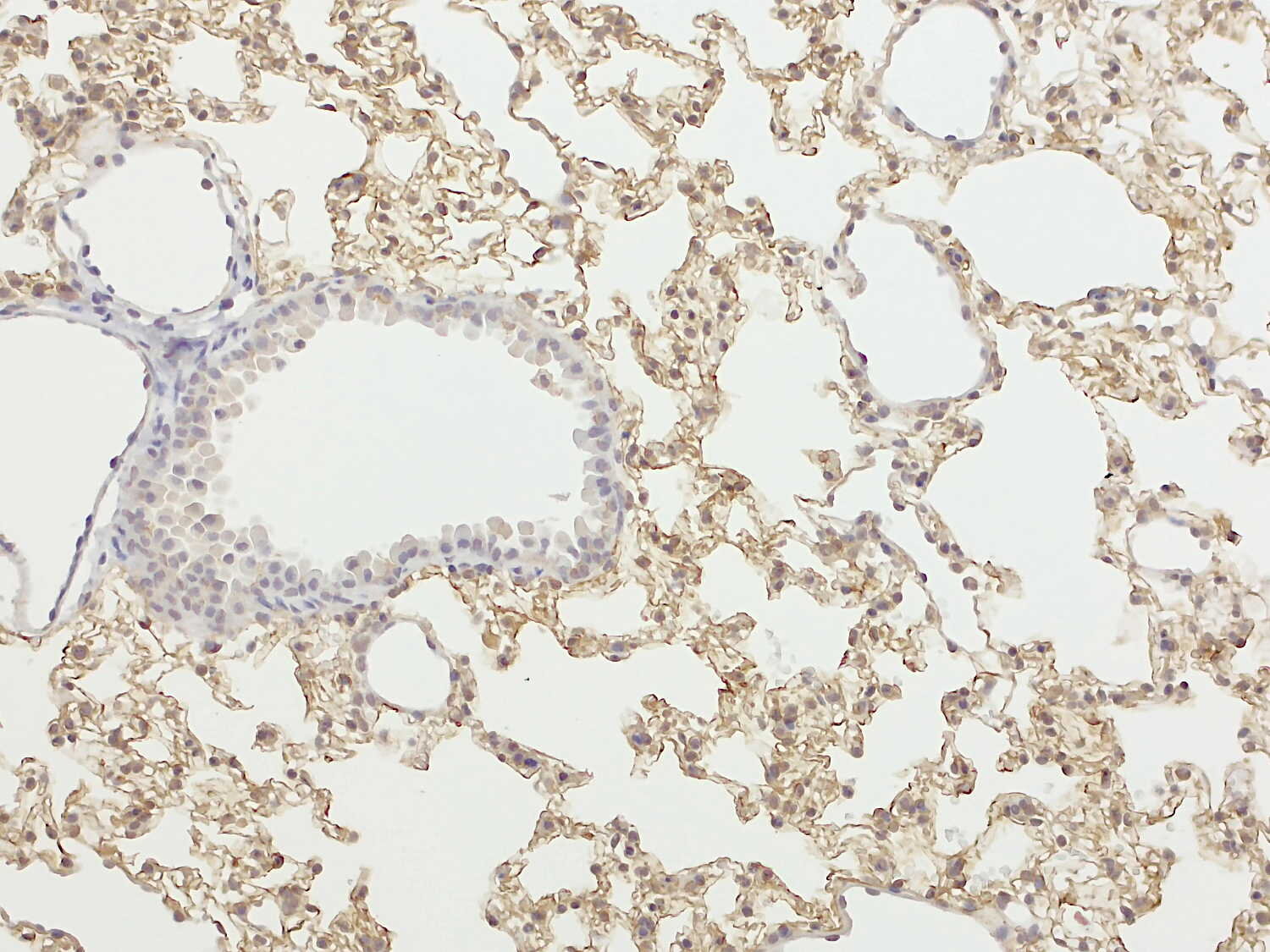
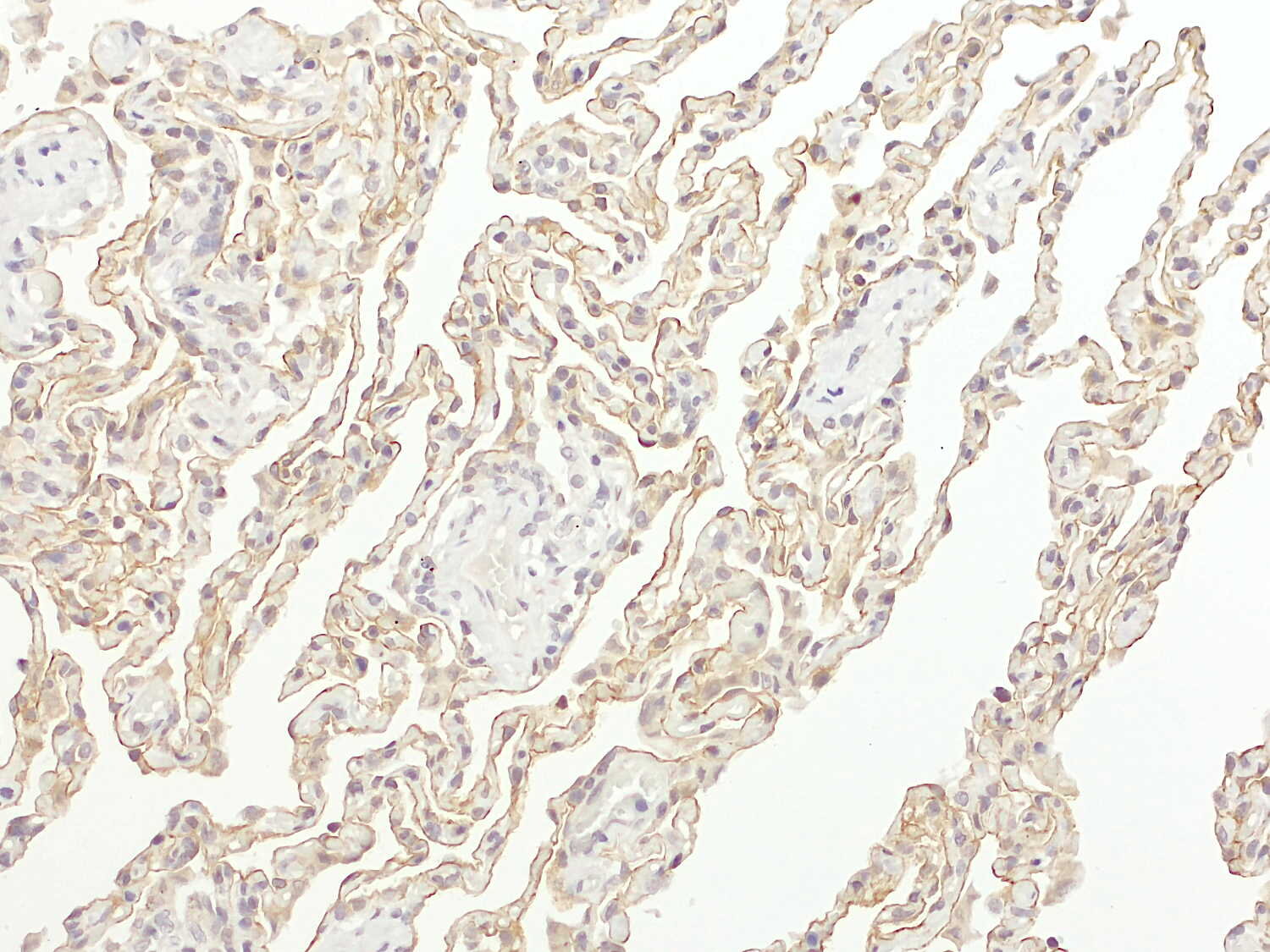
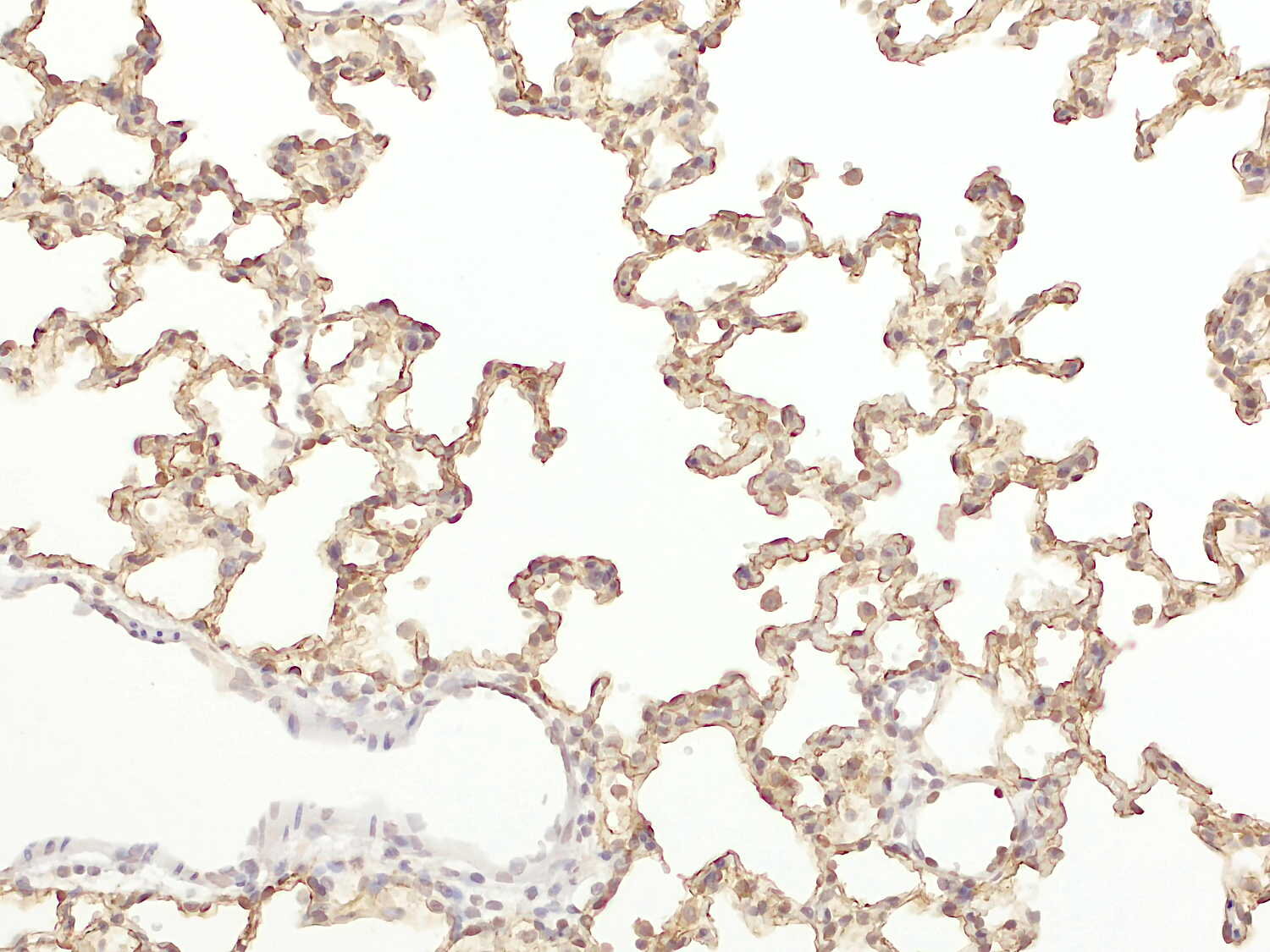
IHC: Antigen retrieval with citrate buffer pH 6 is required. |
| Data sheet | Data Sheet 549_003 |
|
|
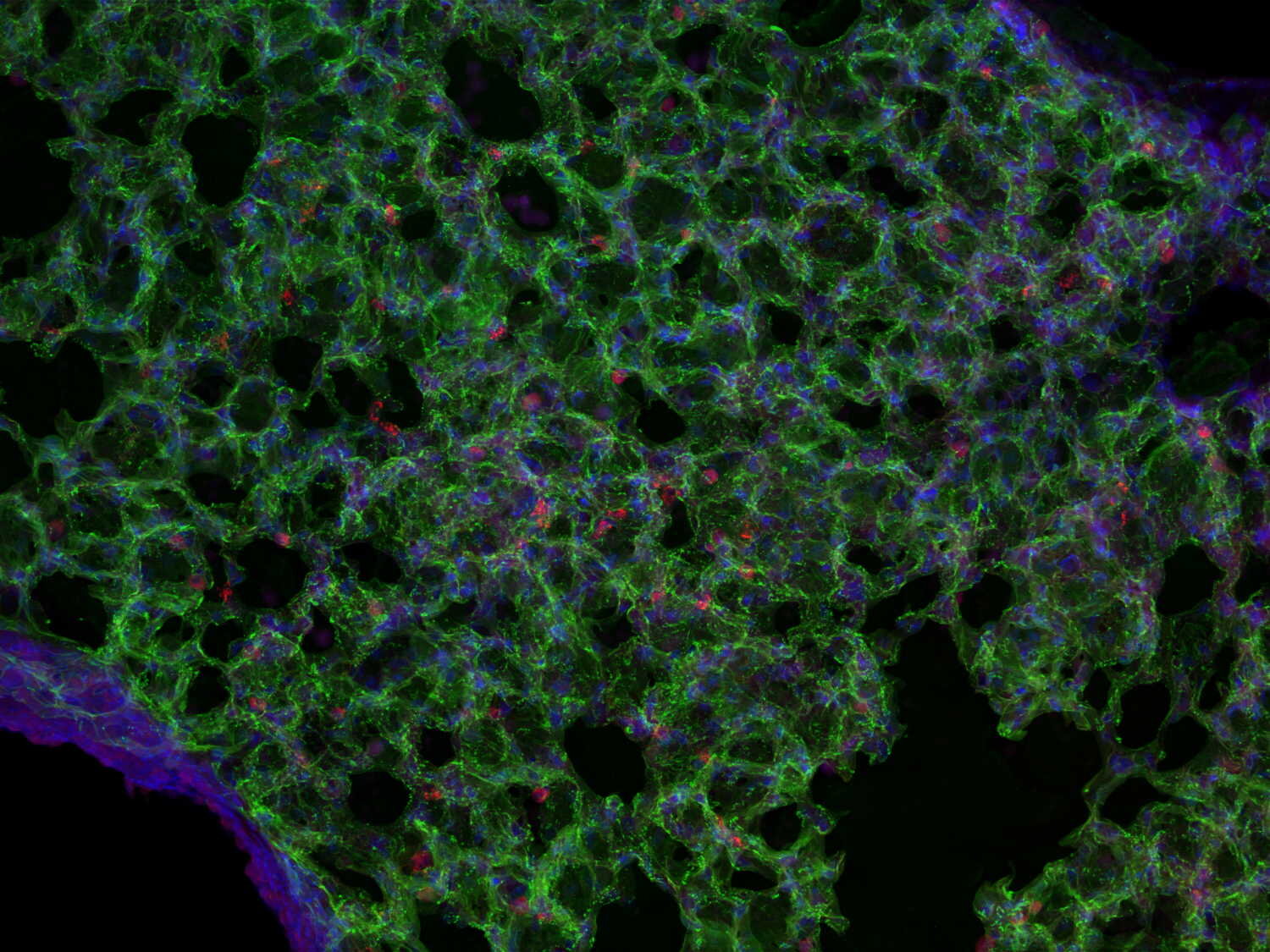
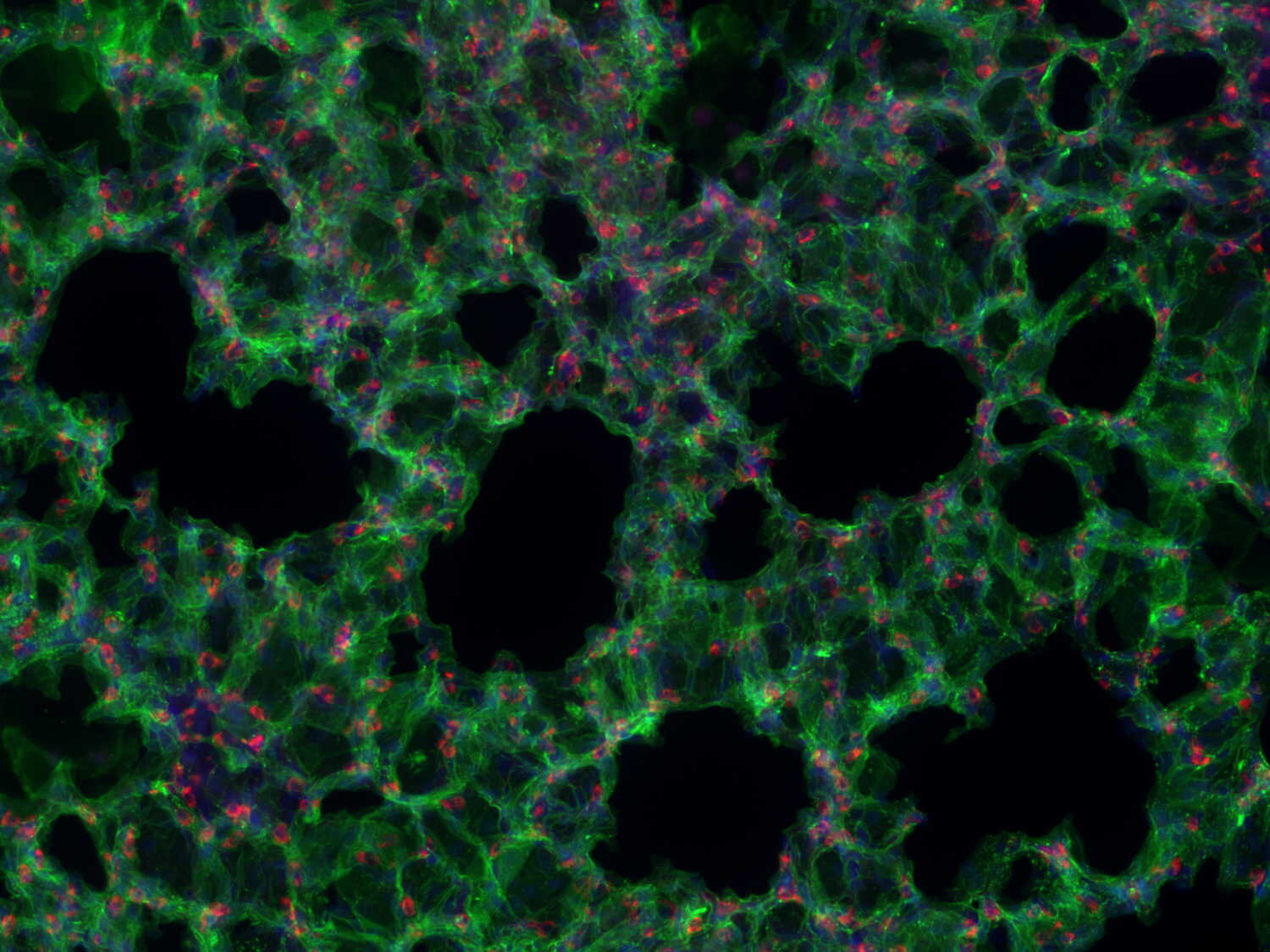
Staining of RAGE-positive alveolar epithelial cells and Chil3 / YM1-positive alveolar macrophages in the mouse lung
The receptor for advanced glycation end products (RAGE) is a multiligand pattern-recognition receptor composed of extracellular V-, C1-, and C2-type immunoglobulin domains, a single transmembrane region, and a cytoplasmic tail that is essential for intracellular signal transduction (1). RAGE interacts with a broad spectrum of ligands, including advanced glycation end products (AGEs), S100/calgranulin proteins, and high-mobility group box 1 (HMGB1), thereby functioning as a potent amplifier of inflammatory signaling across multiple tissues (1,2). In addition, RAGE exists in soluble forms (sRAGE) that lack transmembrane and cytoplasmic domains and can competitively bind RAGE ligands, acting as decoy receptors that modulate RAGE-dependent signaling (1). Under physiological conditions, RAGE expression is low in most adult tissues, with the notable exception of the lung, where it is abundantly expressed on alveolar epithelial cells and alveolar macrophages (3,4). In the context of acute lung injury, RAGE plays a central role in mediating inflammatory responses, and therapeutic blockade of RAGE after injury has been shown to significantly attenuate inflammation and tissue damage in experimental models (4). Beyond pulmonary pathology, aberrant activation of RAGE and sustained engagement by its ligands have been implicated in a wide range of inflammatory and degenerative diseases, including diabetes, Alzheimer’s and Parkinson’s disease, multiple sclerosis, stroke, and various forms of cancer (5).
Certificates
ISO 9001 2015 Quality Management System and Green Lab Platinum certification level for sustaining laboratory processes.


Newsletter
Sign up for our newsletter and get the latest updates and news.