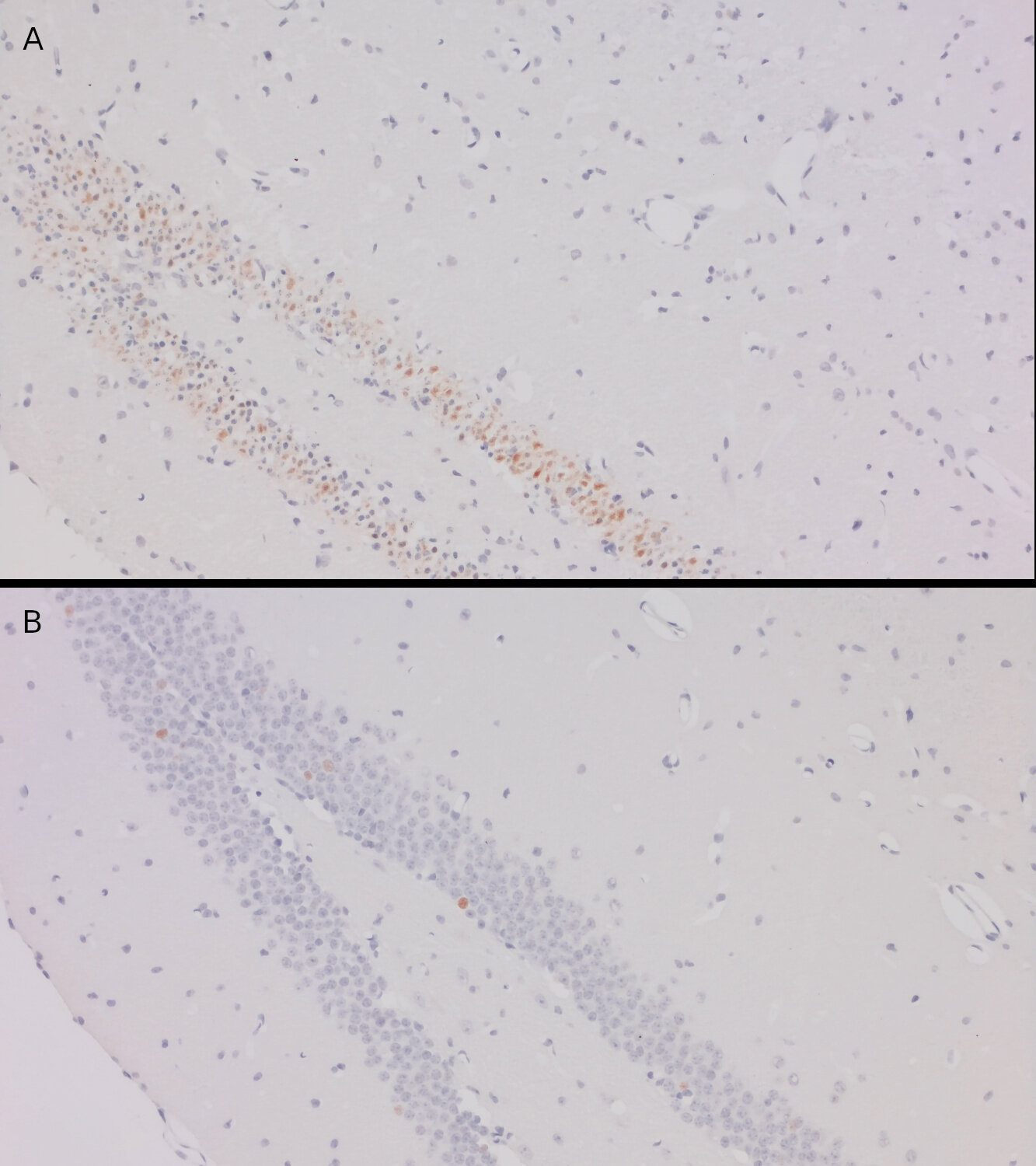
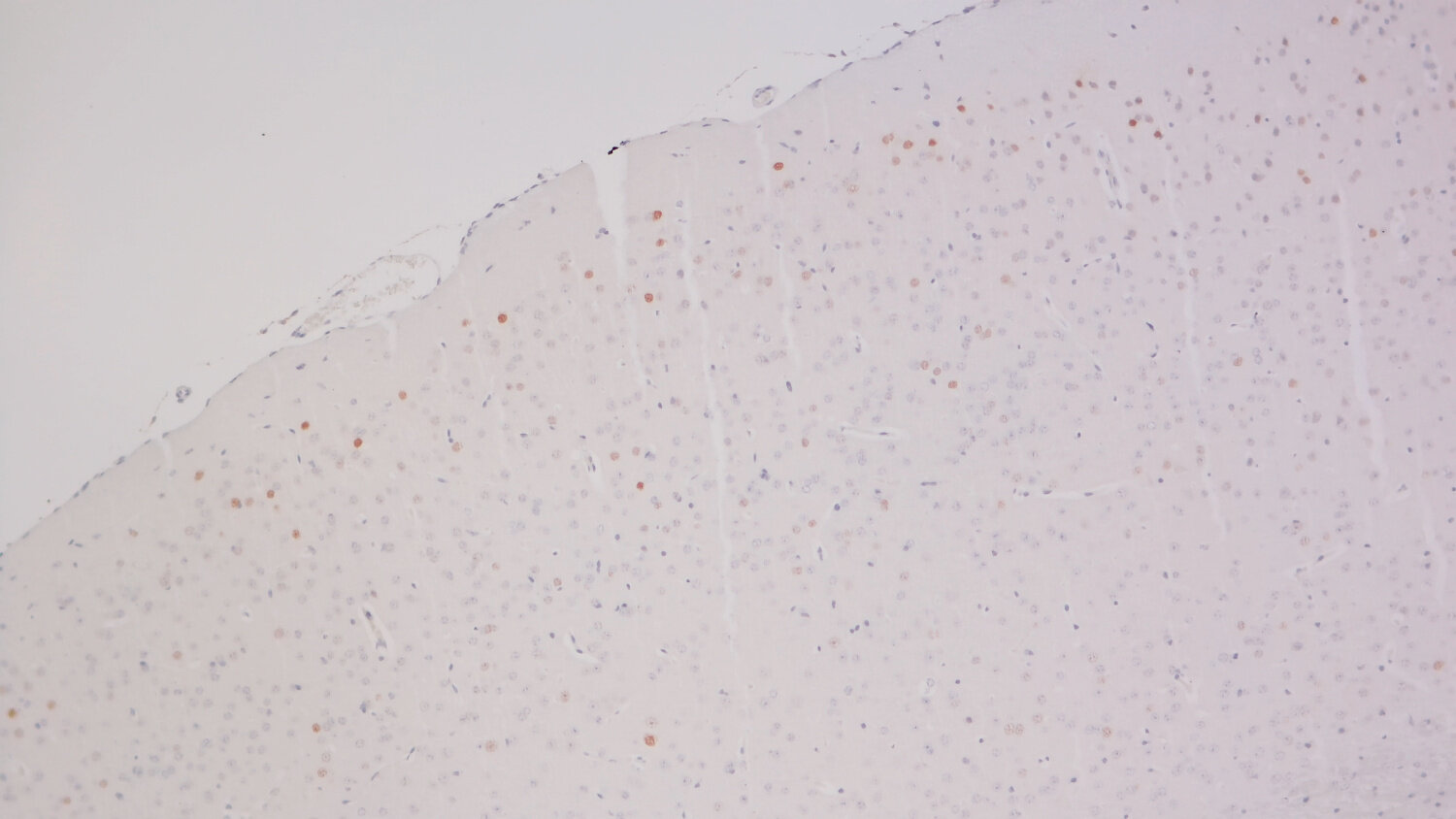
Cat. No.: 546 008
Amount: 100 µg
Price:
$420.00


|
This product was developed by |
 |
|
|
| Cat. No. 546 008 |
100 µg purified recombinant IgG, lyophilized. Albumin and azide were added for stabilization. For reconstitution add 100 µl H2O to get a 1mg/ml solution in PBS. Then aliquot and store at -20°C to -80°C until use. Antibodies should be stored at +4°C when still lyophilized. Do not freeze! |
| Applications | |
| Clone | ASF.15241 |
| Subtype | IgG1 (κ light chain) |
| Reactivity |
Reacts with: mouse (Q8BGD7), rat (Q8CJH6), human (Q8IUM7). Other species not tested yet. |
| Remarks |
This antibody was developed by Activity Signaling, San Diego, USA. |
| Data sheet | Data Sheet 546_008 |
|
|
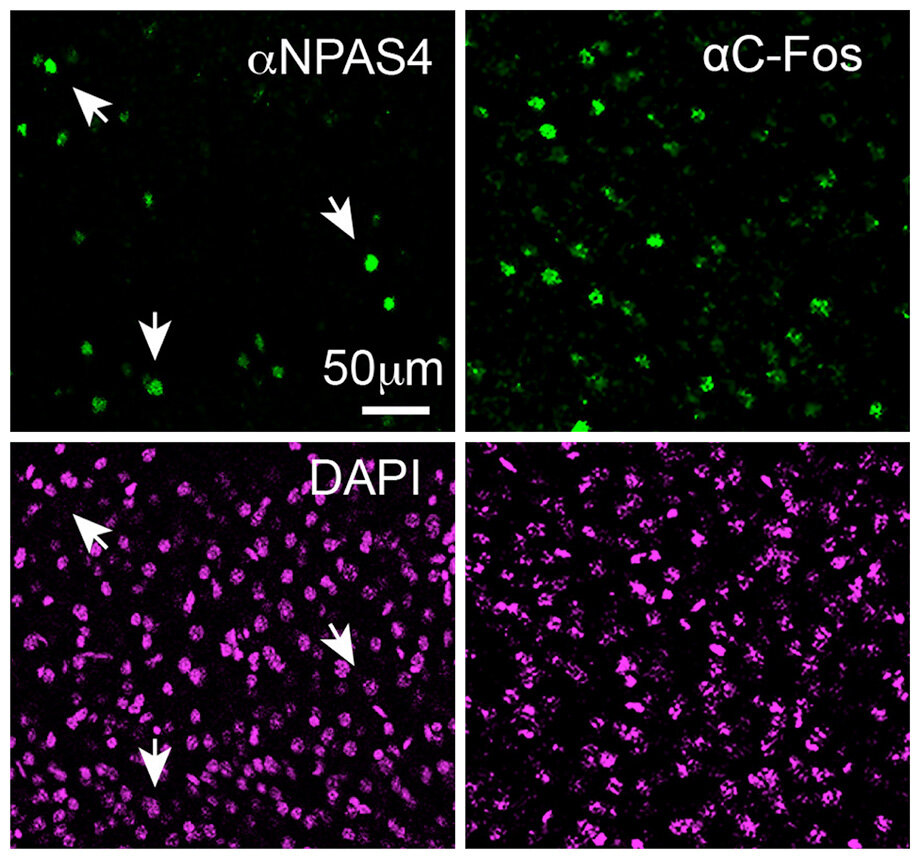
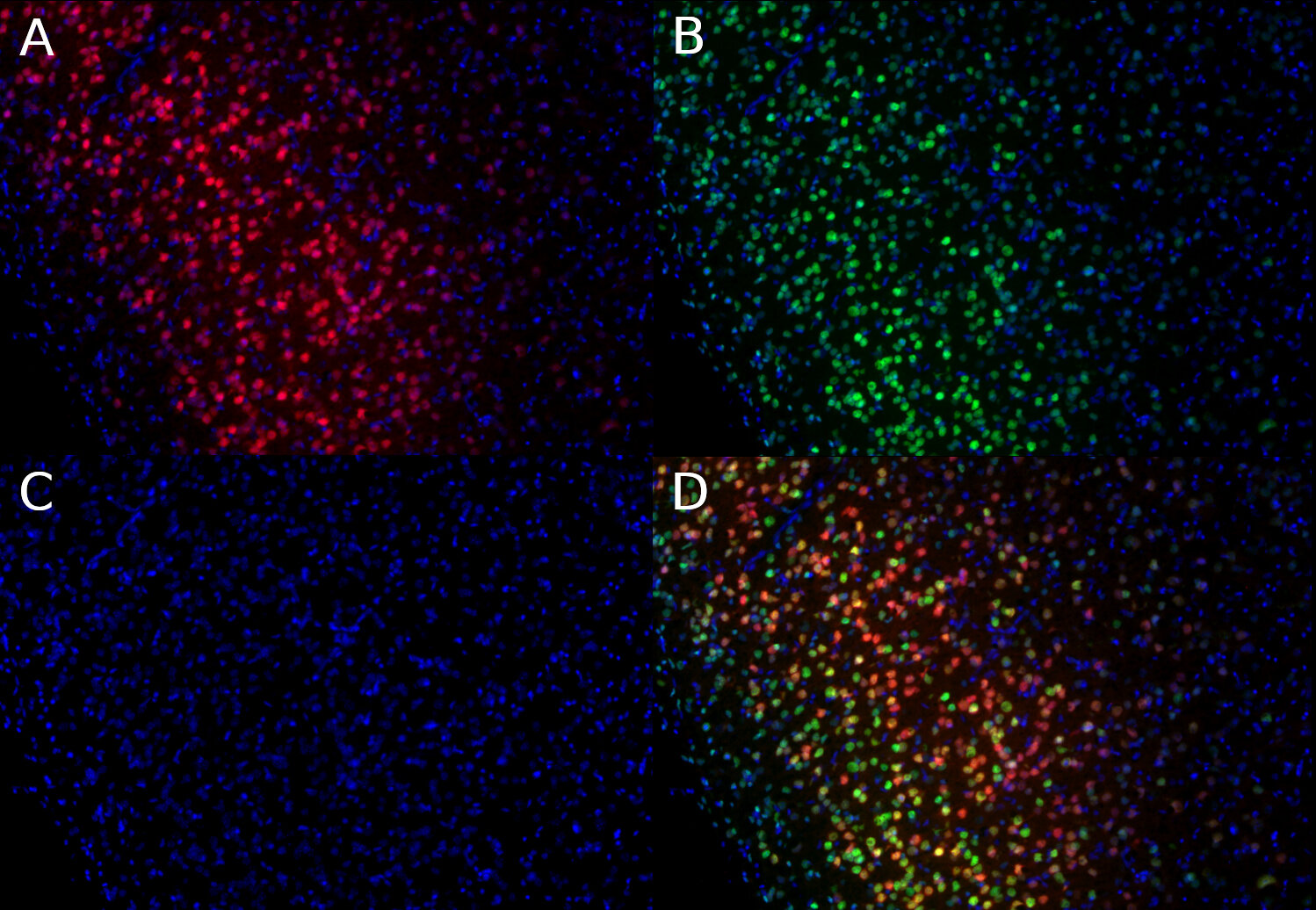
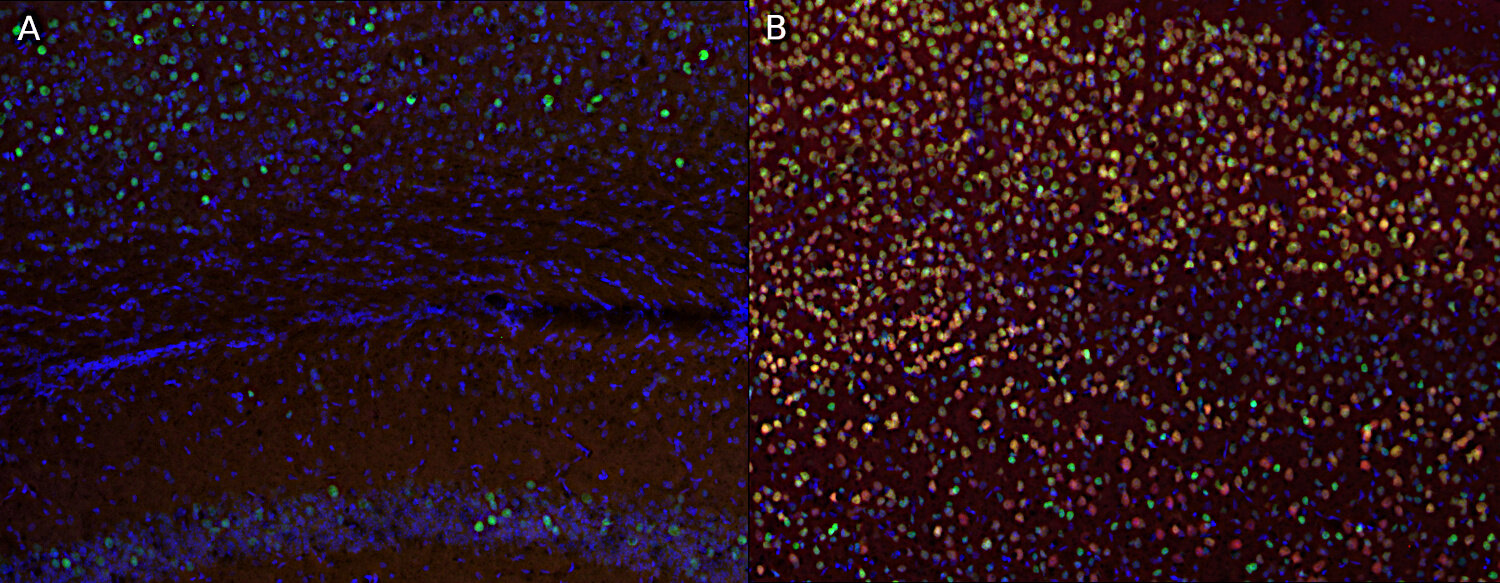
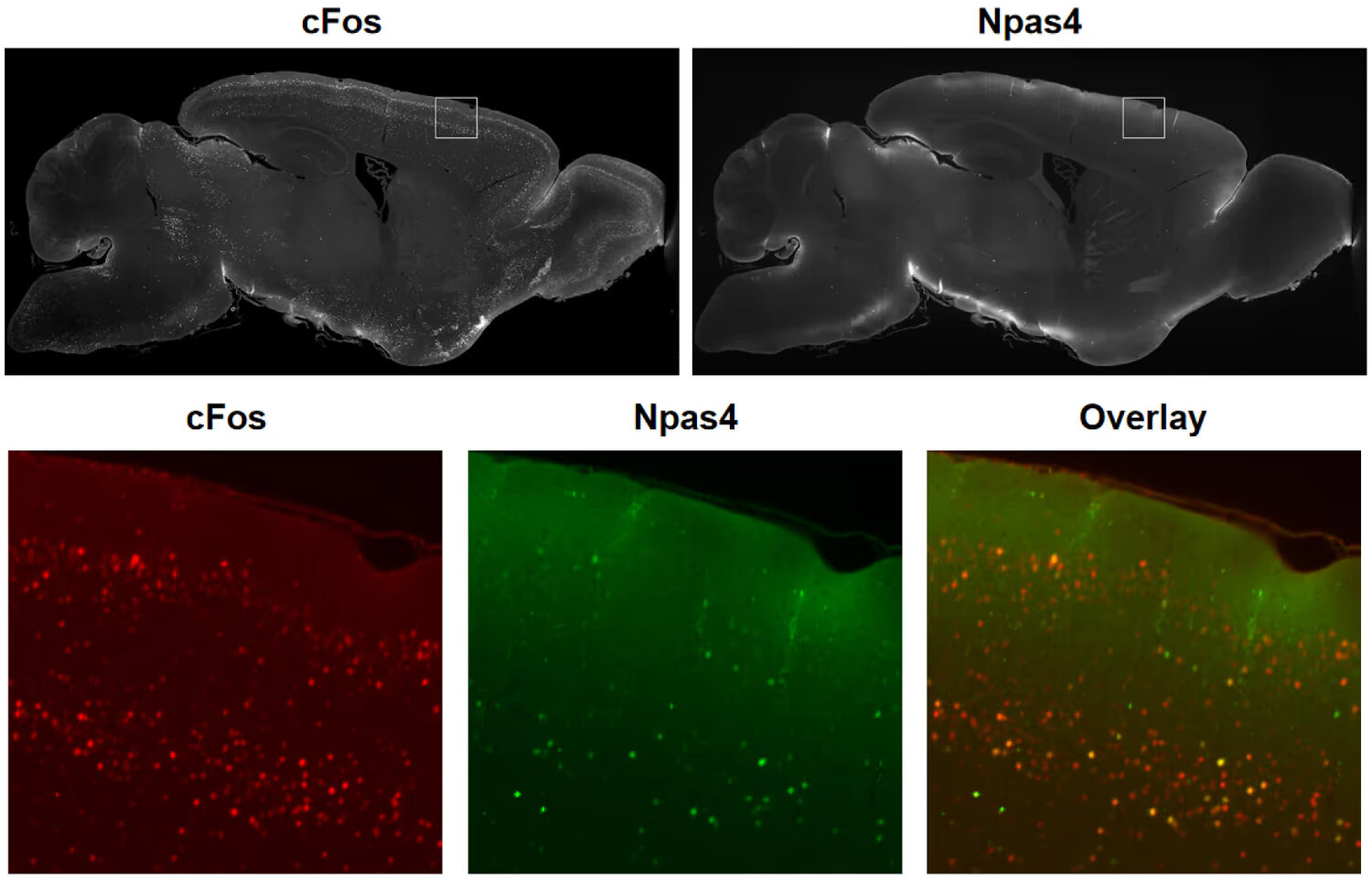
NPAS4 and c-Fos staining of mouse visual cortex after insect hunting
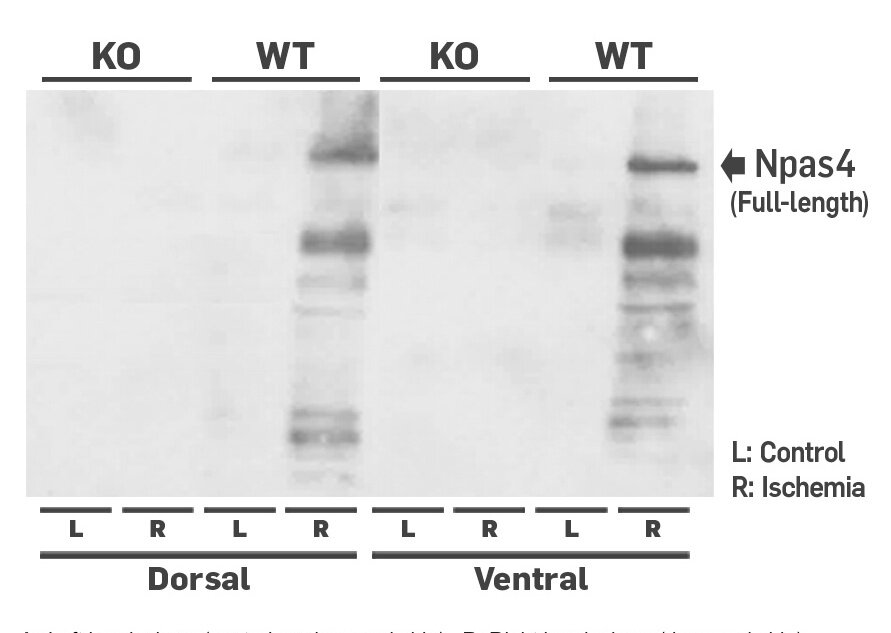
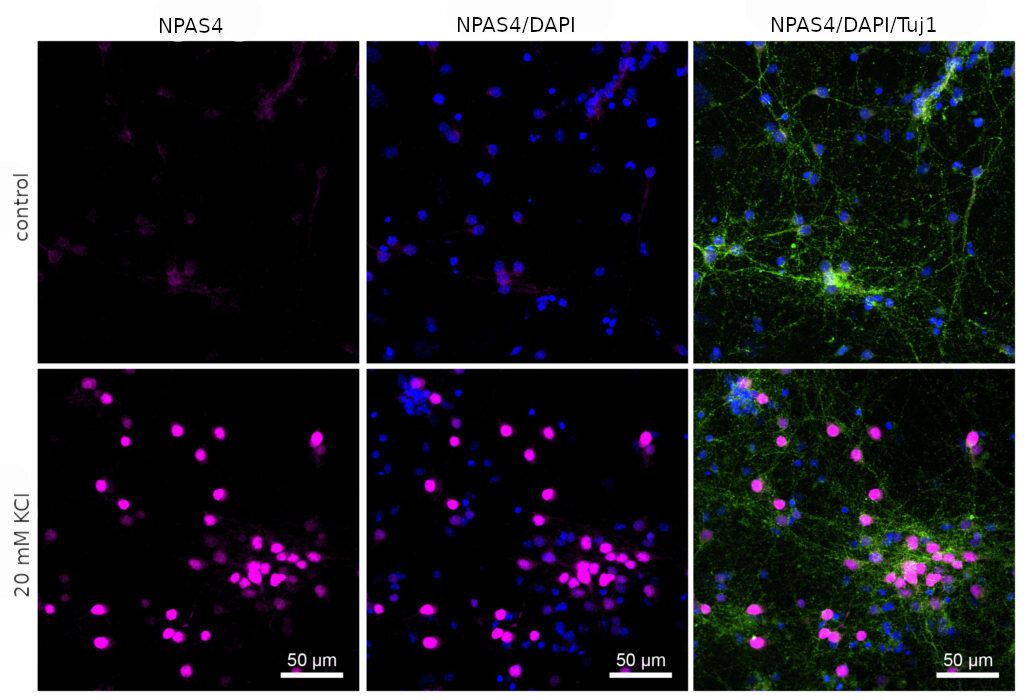
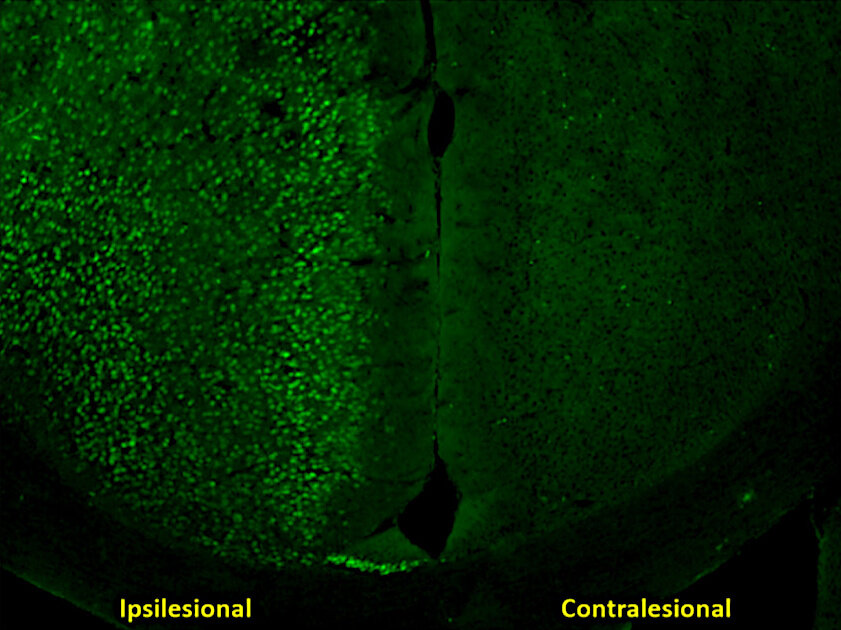
The neuronal PAS domain protein 4 (Npas4) is a neuron specific transcription factor that belongs to the inducible immediate‑early genes and plays a key role in controlling activity dependent inhibitory synapse formation (1, 2). It has been originally identified as an upregulated transcript in ischemic brain tissue (3).
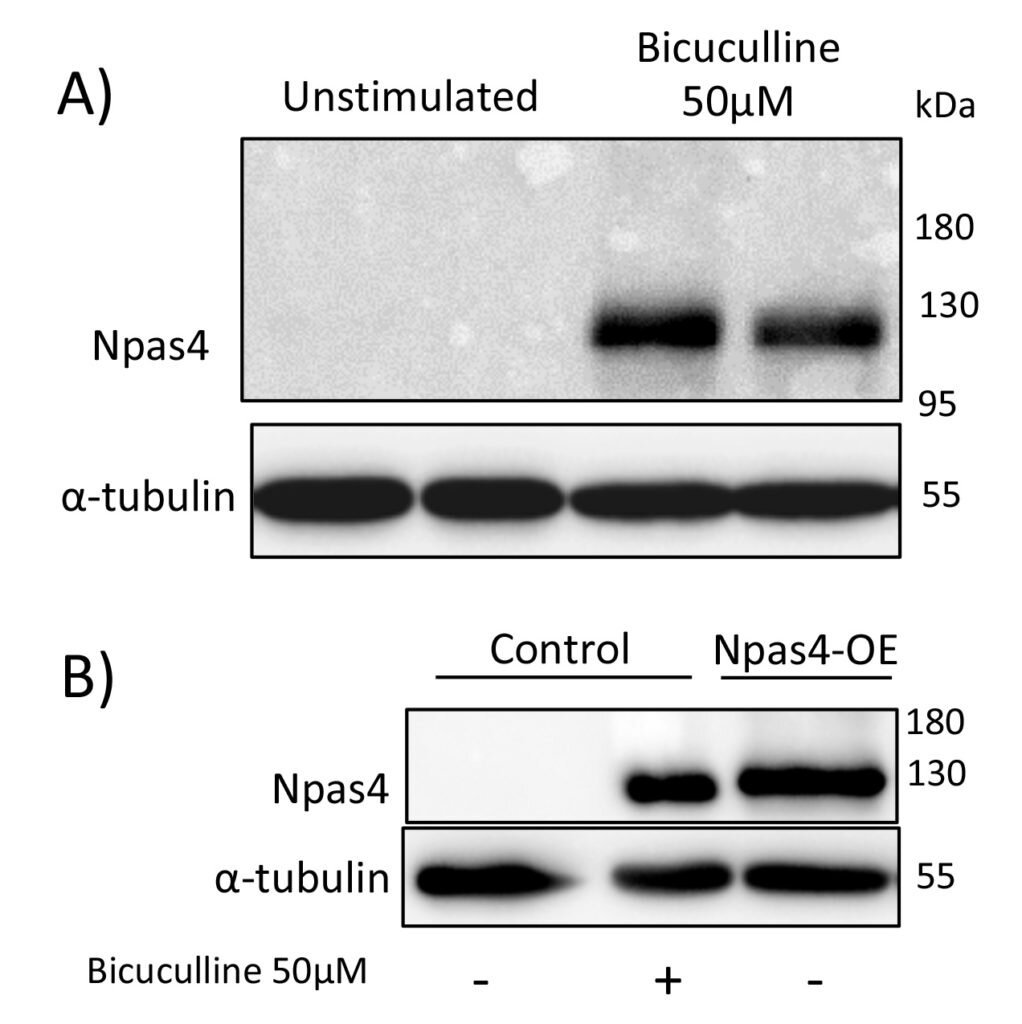
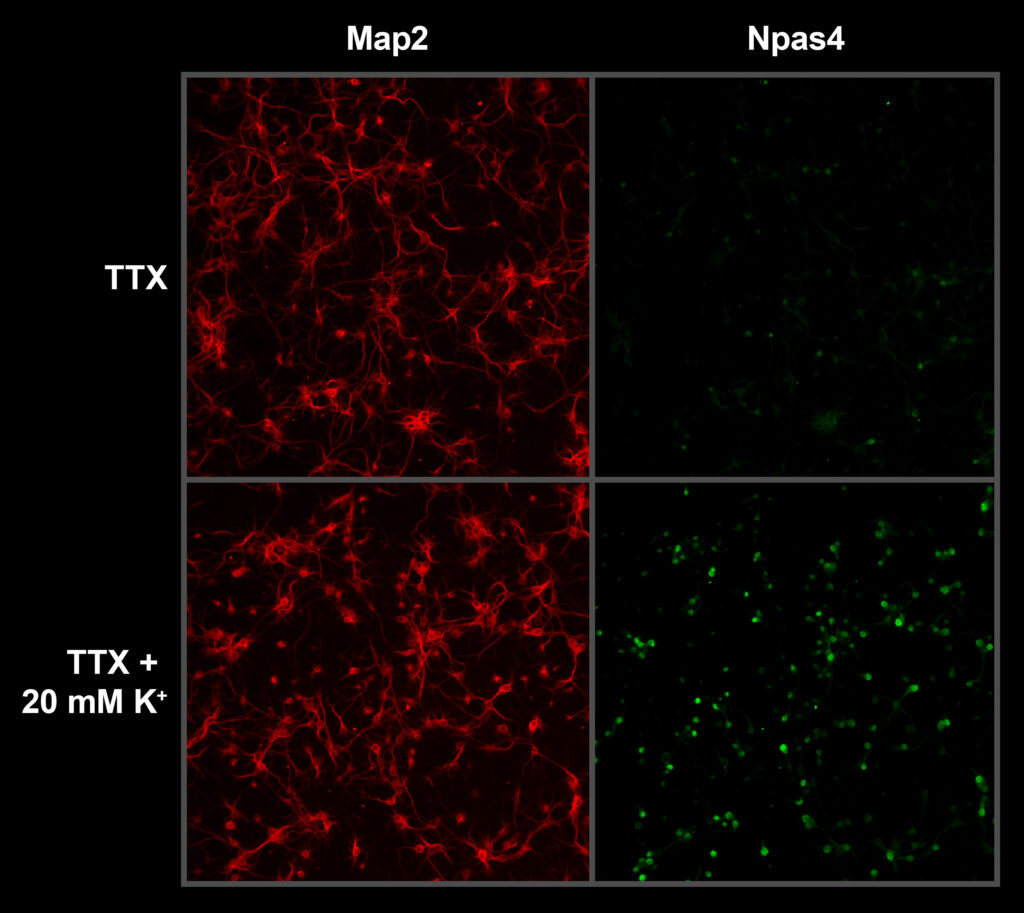
Npas4 is activated within minutes by Ca²⁺ influx mediated neuronal depolarization and peaks after 1–2 h (1, 4). Unlike the classic activity markers c‑Fos, Arc or Egr1, which can be driven by a variety of signaling pathways like cAMP, neurotrophic factors or neuromodulators, Npas4 expression is selectively triggered by neuronal activity (1, 5). This strict coupling to synaptic activity gives Npas4 a higher fidelity as a read‑out of recent neuronal activity (1). The deletion of Npas4 leads to an impairment of neuronal plasticity, underlining its importance for the nervous system to adapt to sensory input (5, 6).
Certificates
ISO 9001 2015 Quality Management System and Green Lab Platinum certification level for sustaining laboratory processes.

Newsletter
Sign up for our newsletter and get the latest updates and news.