Cat. No.: 541 003
Amount: 50 µg
Price:
$380.00


|

|
|
| Cat. No. 541 003 |
50 µg specific antibody, lyophilized. Affinity purified with the immunogen. Albumin and azide were added for stabilization. For reconstitution add 50 µl H2O to get a 1mg/ml solution in PBS. Then aliquot and store at -20°C to -80°C until use. Antibodies should be stored at +4°C when still lyophilized. Do not freeze! |
| Applications |
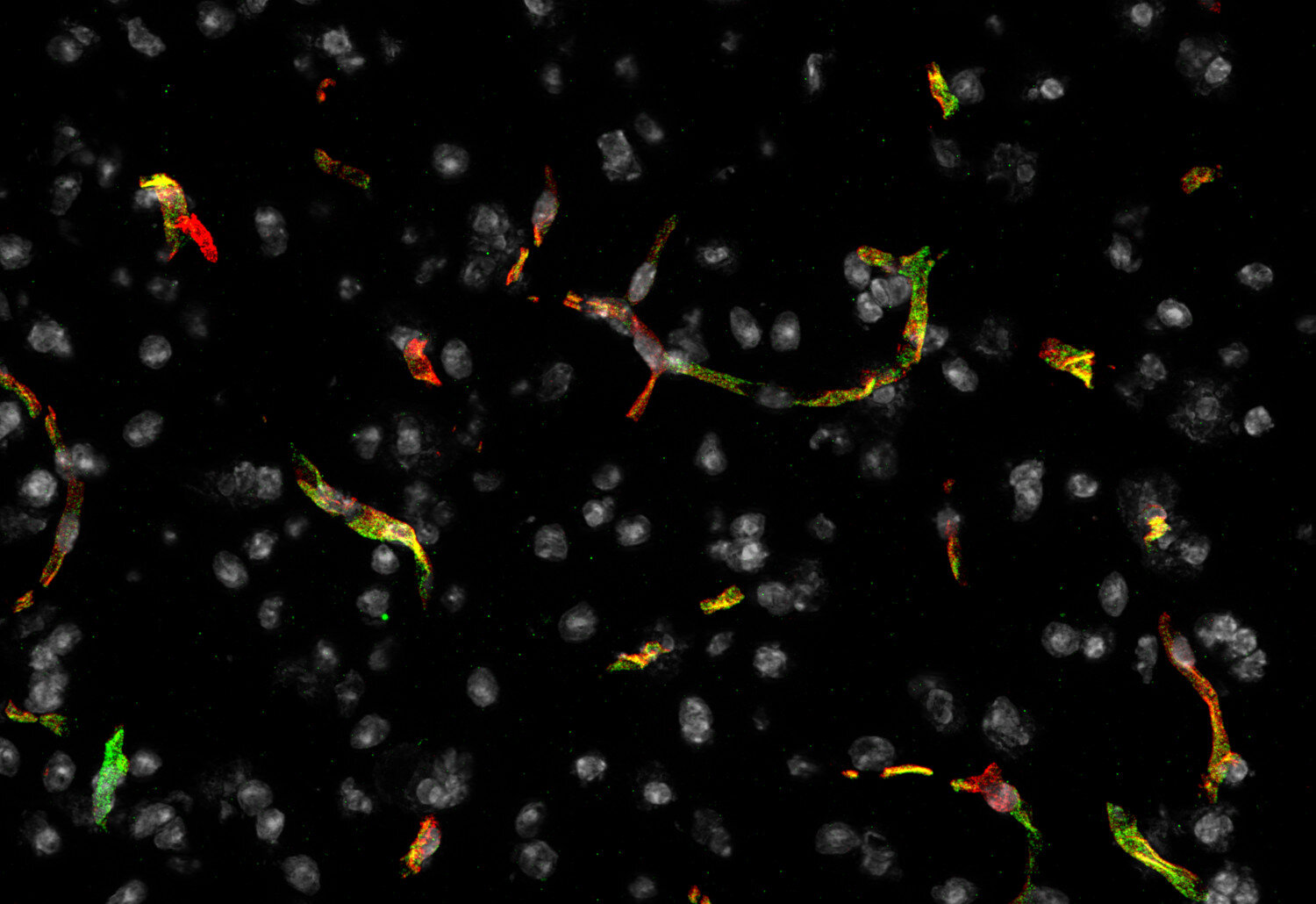
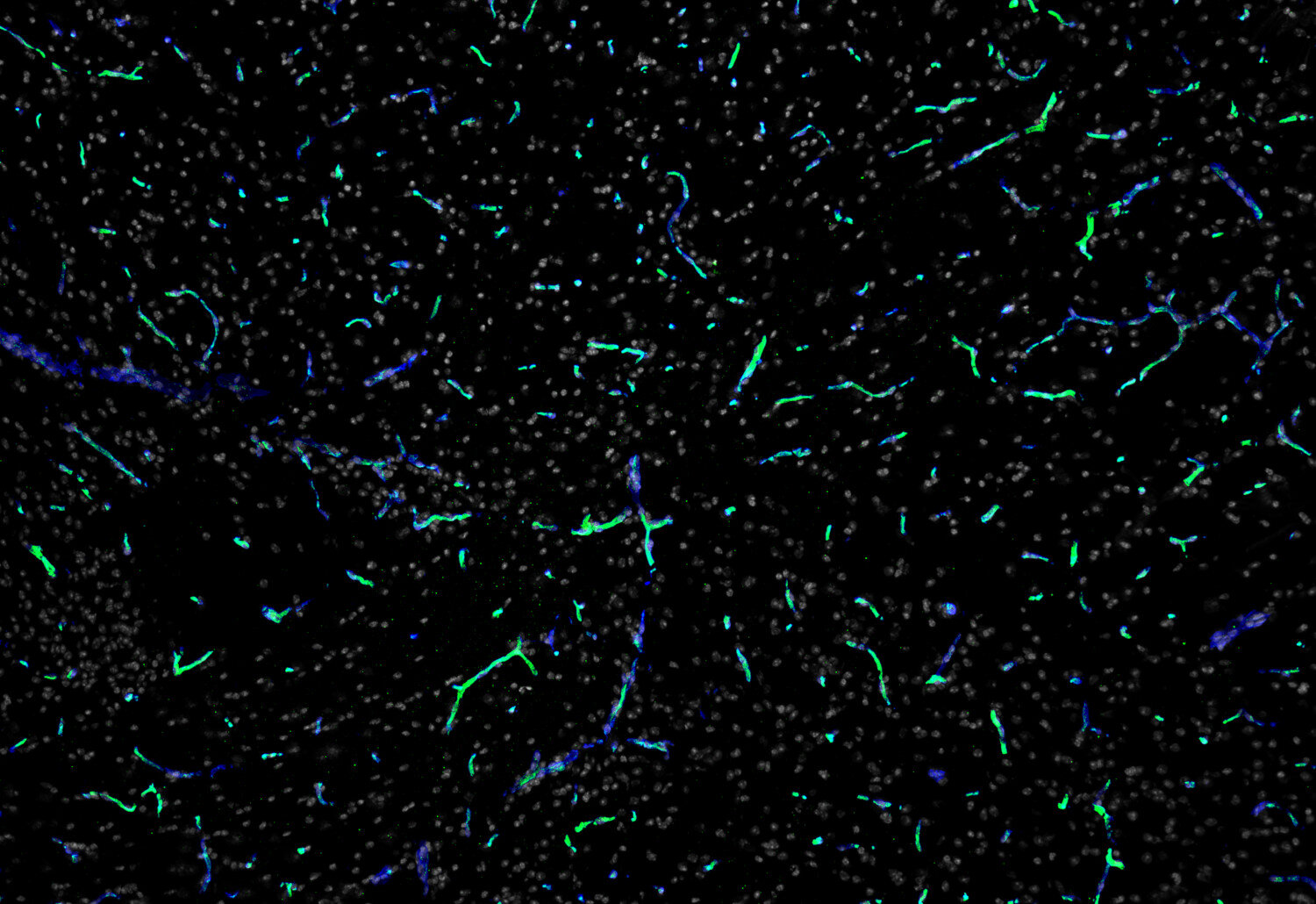
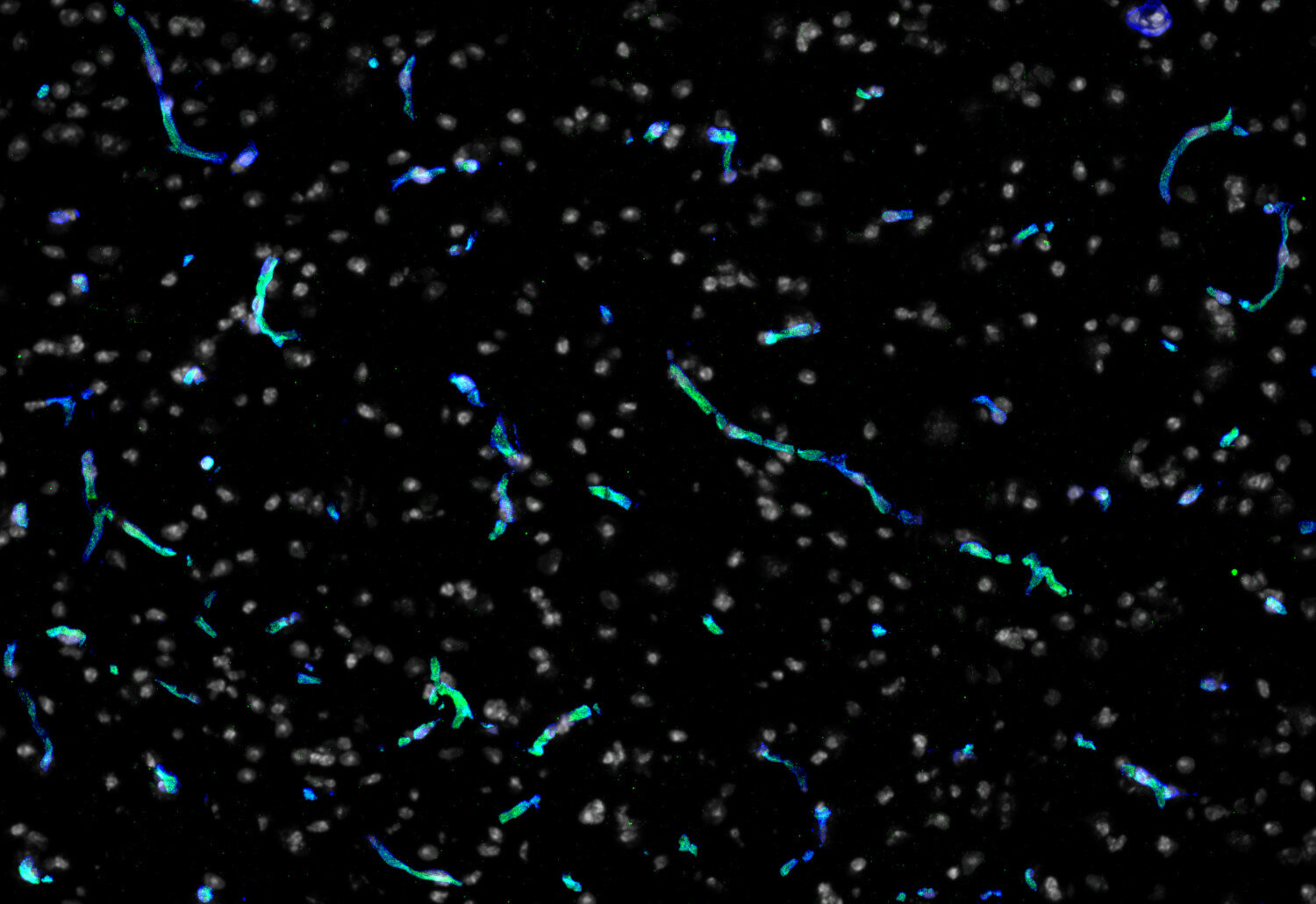
IP: not tested yet ICC: not tested yet IHC: not tested yet IHC-P (FFPE): not tested yet IHC-Fr: 1 : 500 up to 1 : 1000 (see remarks) gallery |
| Immunogen | Synthetic peptide corresponding to residues surrounding AA 20 of mouse Mfsd2a (UniProt Id: Q9DA75) |
| Reactivity |
Reacts with: mouse (Q9DA75). Weaker signal: rat (B1WBW6). Other species not tested yet. |
| Remarks |
IHC-Fr: Methanol fixation is recommended. |
| Data sheet | Data Sheet 541_003 |
|
|
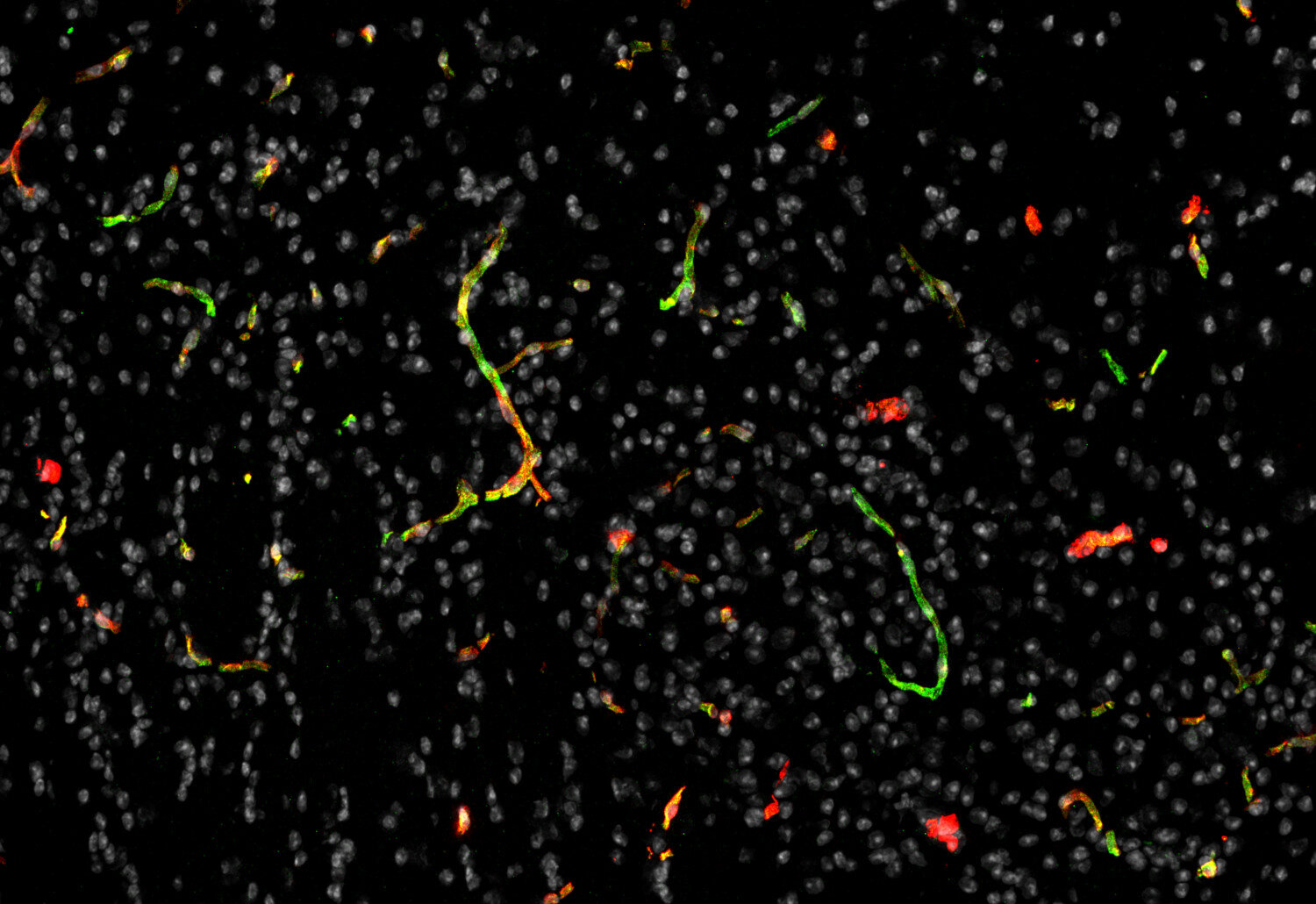
Mfsd2a-positive blood vessels in a mouse brain section
Major facilitator superfamily domain-containing protein 2A (Mfsd2a) is a transmembrane protein that functions as a sodium-dependent transporter of lysophosphatidylcholine (LPC)–bound fatty acids, including the essential omega-3 fatty acid docosahexaenoic acid (DHA) (1). It is selectively expressed in endothelial cells of the central nervous system (CNS) vasculature and is a key regulator of blood–brain barrier (BBB) integrity (2). Mfsd2a maintains BBB function by suppressing caveolae-mediated transcytosis in brain endothelial cells, thereby limiting vesicular transport across the endothelium (2,3). Reduced expression of Mfsd2a has been associated with BBB disruption in several neurological conditions, including cerebral ischemia, hemorrhage, and chronic cerebral hypoperfusion (3,4).
In addition to its role at the BBB, Mfsd2a is expressed in other tissues where it contributes to lipid transport and metabolic processes. For instance, Mfsd2a has been implicated in lipid metabolism in the liver and in pulmonary surfactant homeostasis in the lung (5,6). Altered Mfsd2a expression has also been associated with cancer. Reduced Mfsd2a levels have been reported in non-small cell lung cancer and are linked to altered cell cycle regulation and cell–matrix interactions, suggesting a tumor suppressor role (7). Furthermore, downregulation of Mfsd2a in tumor-associated brain vasculature contributes to BBB disruption and altered lipid metabolism in brain metastases (8).
Certificates
ISO 9001 2015 Quality Management System and Green Lab Platinum certification level for sustaining laboratory processes.


Newsletter
Sign up for our newsletter and get the latest updates and news.