Cat. No.: 135 009
Amount: 50 µg
Price:
$420.00


|

|
|
| Cat. No. 135 009 |
50 µg purified recombinant IgY, lyophilized. Albumin and azide were added for stabilization. For reconstitution add 50 µl H2O to get a 1mg/ml solution in TBS. Then aliquot and store at -20°C to -80°C until use. Antibodies should be stored at +4°C when still lyophilized. Do not freeze! |
| Applications | |
| Clone | Ch57A8 |
| Subtype | IgY (λ light chain) |
| Immunogen | Synthetic peptide corresponding to residues near the carboxy terminus of mouse VGLUT3 (UniProt Id: Q8BFU8) |
| Reactivity |
Reacts with: rat (Q7TSF2), mouse (Q8BFU8). Other species not tested yet. |
| Remarks |
This antibody is a chimeric antibody based on the monoclonal mouse antibody clone 57A8. The constant regions of the heavy and light chains have been replaced by chicken specific sequences. The antibody can therefore be used with standard anti-chicken secondary reagents. The antibody has been expressed in mammalian cells. |
| Data sheet | Data Sheet 135_009 |
|
|
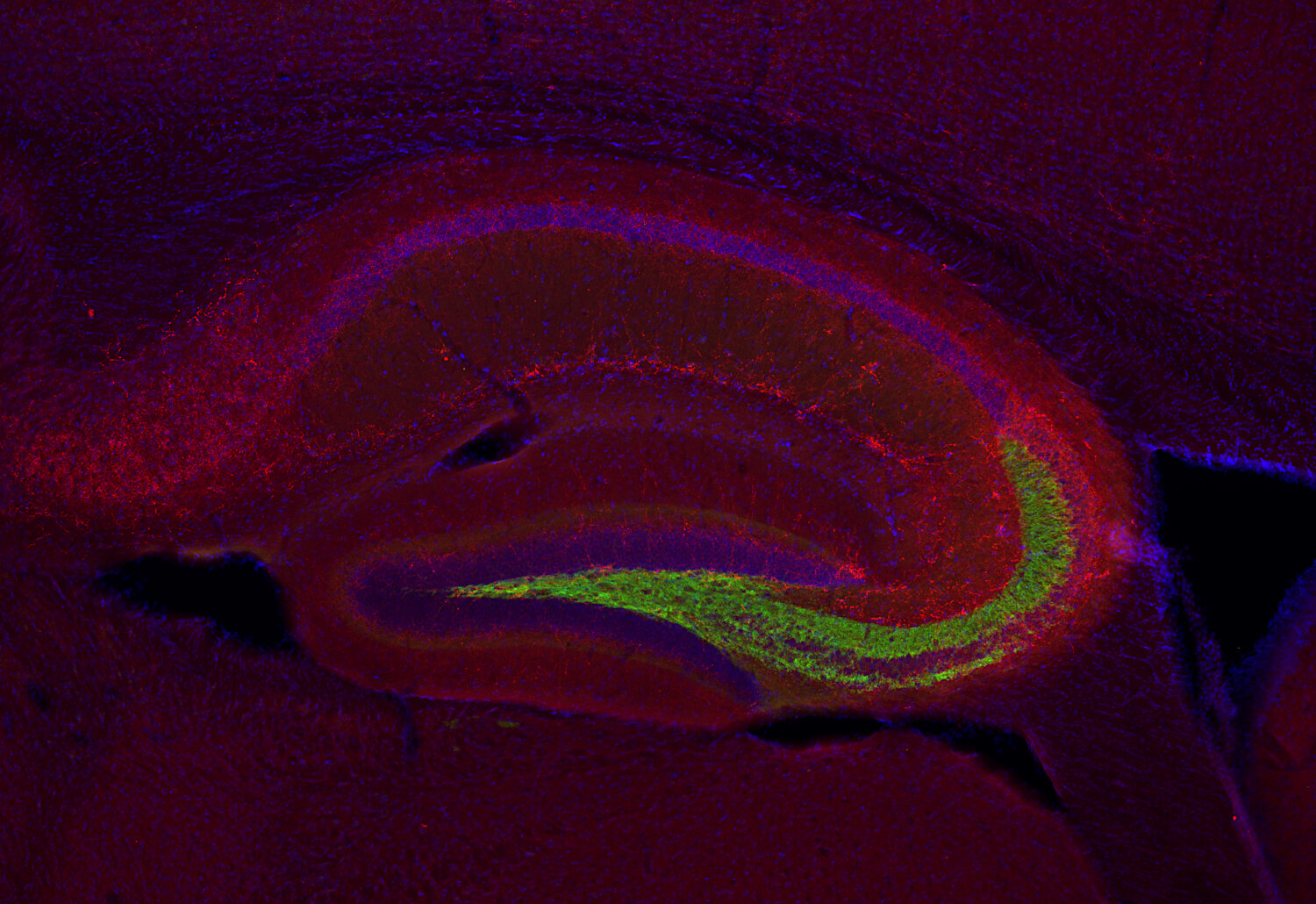
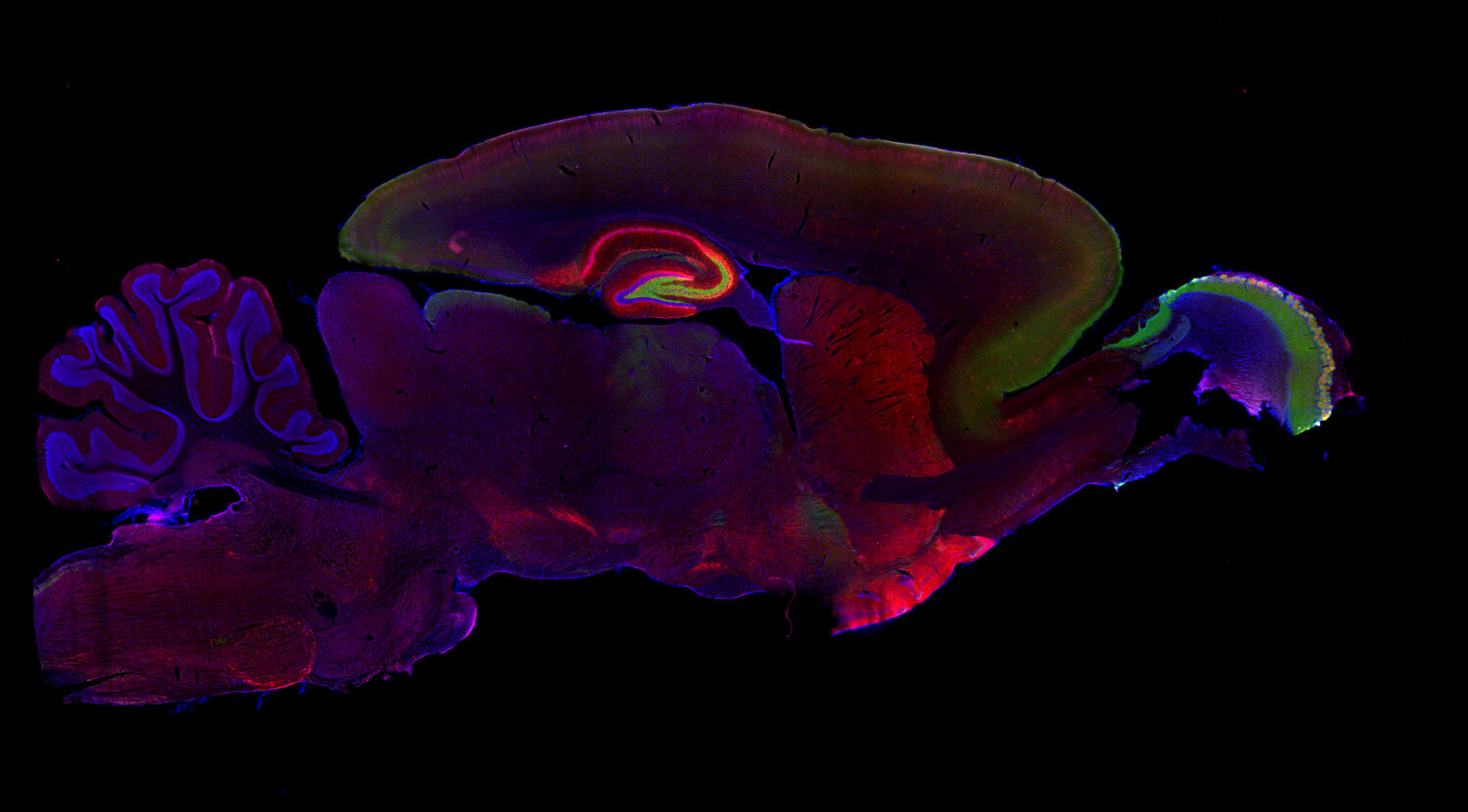
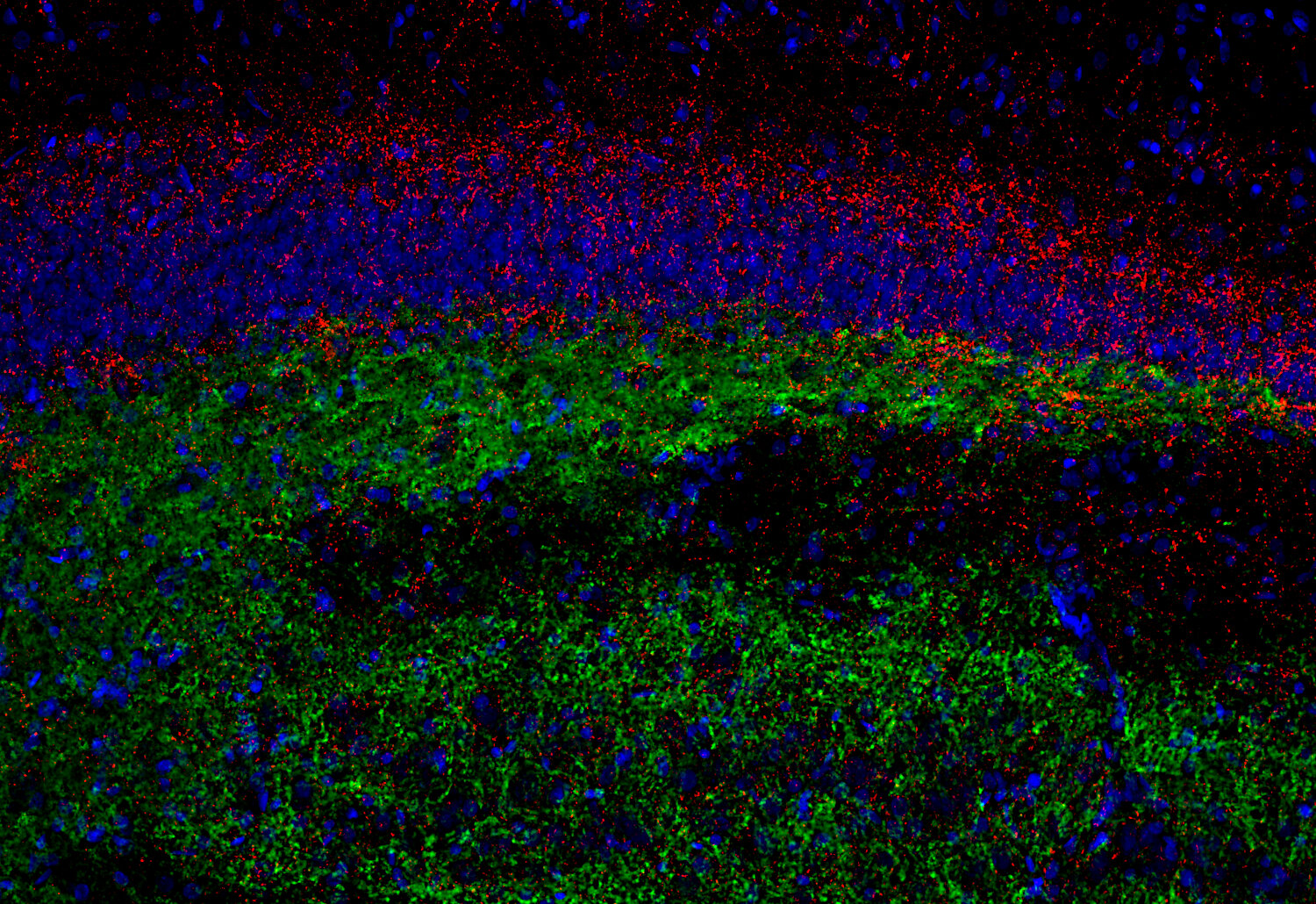
Indirect immunostaining of a mouse hippocampus section for VGLUT3 (red) and Synaptoporin (green)
Vesicular glutamate transporter 3 (VGLUT3), encoded by SLC17A8, is a member of the vesicular glutamate transporter family that mediates the uptake of glutamate into synaptic vesicles. Unlike VGLUT1 and VGLUT2, VGLUT3 is expressed in distinct populations of serotonergic, cholinergic, GABAergic and glutamatergic neurons, including neurons in the cortex, hippocampus, striatum and raphe nuclei [1–3]. A co-localization with the acetylcholine transporter VAChT and the monoamine transporter 2 VMaT2 has been reported in distinct neuronal populations, particularly during development [4,5]. VGLUT3 enables glutamate co-transmission in neurons that primarily use other neurotransmitters and can modulate the storage and release of serotonin, acetylcholine and GABA. In particular, VGLUT3 contributes to vesicular synergy in striatal cholinergic interneurons, thereby influencing cholinergic signaling [1,2].
VGLUT3 dysfunction has been associated with several neurological and sensory disorders. In the auditory system, VGLUT3 is essential for glutamate release from cochlear inner hair cells, and pathogenic SLC17A8 variants cause autosomal-dominant nonsyndromic hearing loss (DFNA25) [6]. VGLUT3 has also been implicated in Parkinson’s disease and L-DOPA-induced dyskinesia, as well as pathological pain processing [2].
Certificates
ISO 9001 2015 Quality Management System and Green Lab Platinum certification level for sustaining laboratory processes.


Newsletter
Sign up for our newsletter and get the latest updates and news.